The other side of the bed
Last year I was the patient, for a leg that stopped working properly and a pair of operations to fix it. What a decade of medicine had not taught me, being on the trolley did.
Last year my right leg developed compartment syndrome, and for a while my foot stopped doing what I told it to. I ended up having fasciotomies on both legs, spent months recovering, and came out the other side fully intact. I am writing about it here because it taught me things about being a patient that a decade of being a doctor had not, and because I think patients are owed the honesty of a doctor who has been on the trolley.
First, the plain version of what happened, because I would explain it this way in a consultation. The muscles of the lower leg live inside compartments wrapped in fascia, a tough layer that does not stretch. If pressure inside a compartment rises high enough, blood flow to the muscle and nerve is squeezed off. In my case the nerve that lifts the foot was affected, which produces something called foot drop: the foot hangs, the toes catch on the ground, and walking becomes a conscious act of hip-hitching instead of the automatic thing it was the day before. The treatment is surgical and refreshingly direct. You open the fascia and let the pressure out. I had all four compartments released in both legs.
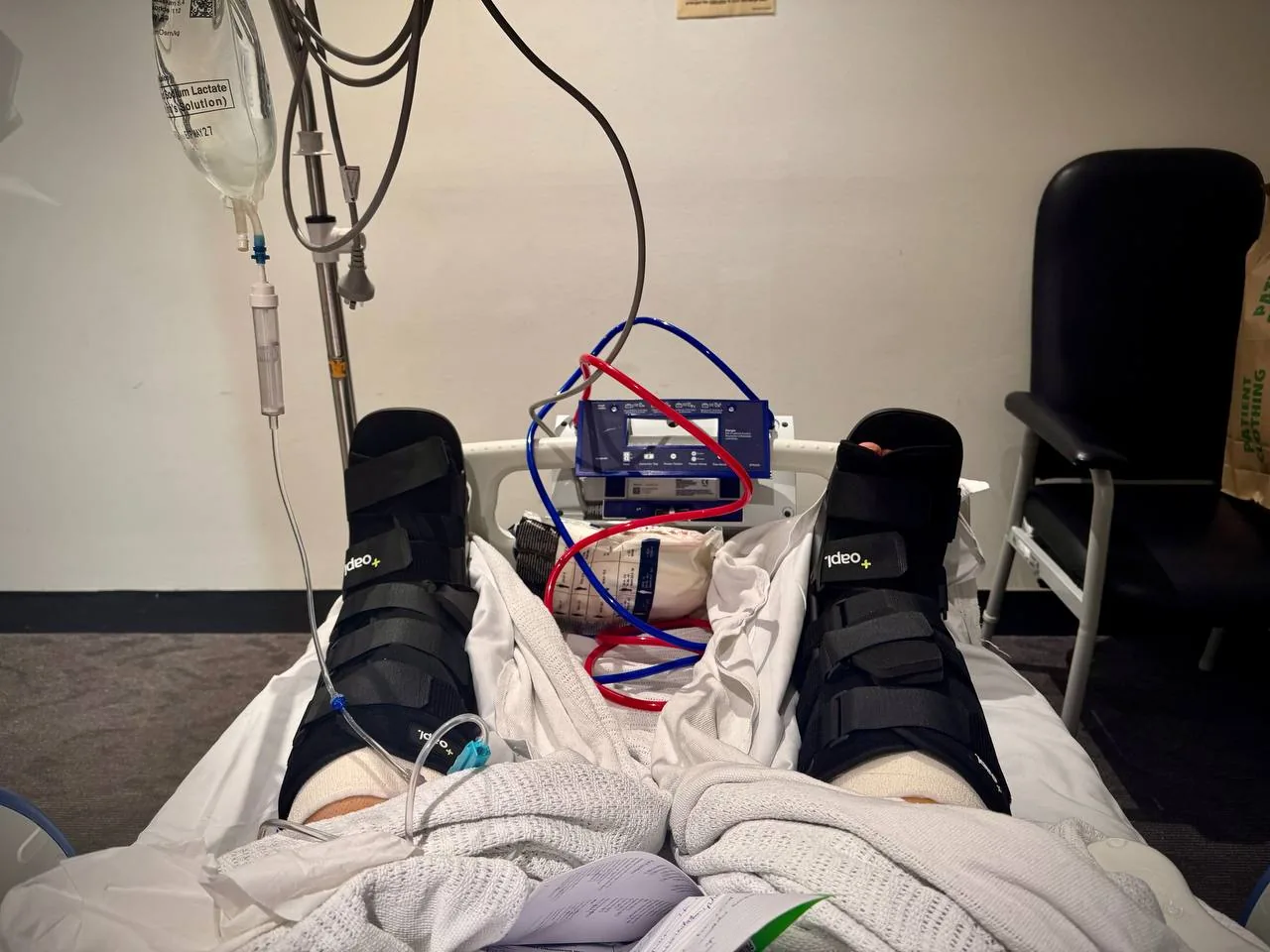
Here is the first thing I learned, within about a day: knowing the medicine does not protect you from the experience. I knew exactly what foot drop was. I had examined it, explained it, referred it. None of that knowledge did anything at all for the specific 2am feeling of lying awake running the same loop every patient runs: how long, how much, what if it doesn't. Doctors like to imagine that understanding a condition domesticates it. It does not. It just means your fear is better informed.
The second thing was about time. In clinic, a review in six weeks is a sentence I say between other sentences. From the other side, six weeks is a season. Nerves recover slowly, on the order of a millimetre a day when they recover at all, and nobody can promise you the second half of that sentence in advance. So recovery is mostly waiting, and waiting is mostly mornings: you wake up, you try the foot, you grade it against yesterday, and most days the grade is identical, and you do it again tomorrow. Progress, when it came, was real but so gradual that I only believed it in retrospect. I now say this to patients explicitly: recovery is measured in weeks and months, you will not feel it day to day, and the flatness of the middle stretch is normal rather than a sign of failure.
The third thing was how much the small interactions weigh. When you are the person on the trolley, the clinical plan is doing enormous work and is largely invisible to you. What you actually experience is the texture: whether someone explains before they touch, whether your question gets an answer or a reassurance, whether the person in front of you seems to be treating your leg or treating you. None of the people who looked after me did anything remarkable. They were simply careful, and unhurried in the moments that counted, and I noticed every single instance of it the way you notice water when you are thirsty. I always believed manner counted in medicine. I now believe it is a treatment, with a dose and an effect.
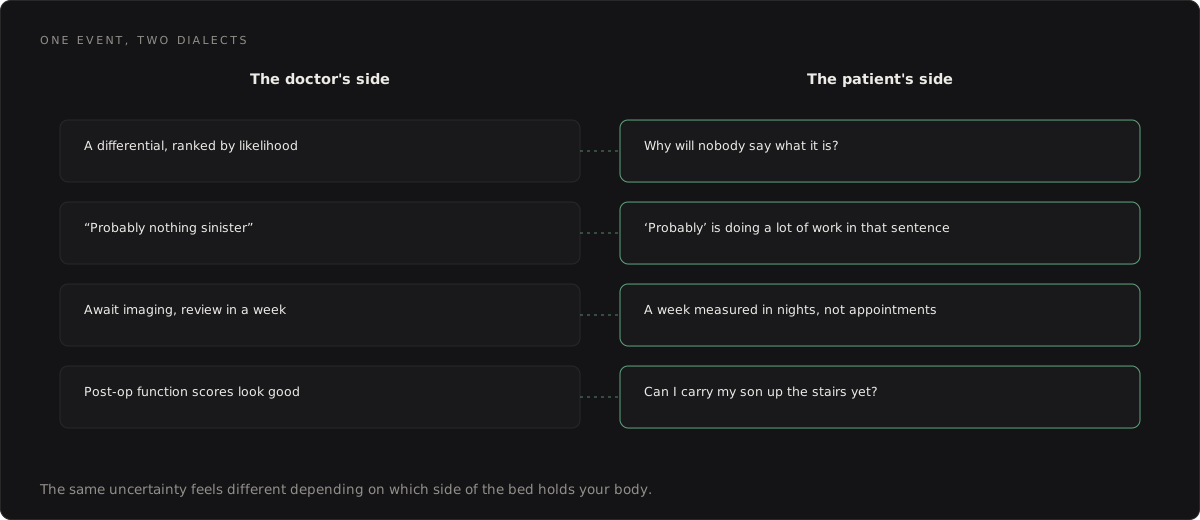
And the last thing, the one that most changed how I practise: uncertainty feels completely different depending on which side of it you are standing on. Doctors live in probabilities all day and get comfortable there, sometimes too comfortable. Patients live in one single outcome that has not arrived yet. When I told people "we will know more in a few weeks", I used to think I was giving them information. Having received that sentence myself, I know it lands as a closed door unless you also say what I now try always to say: here is what we are watching for, here is what would be a good sign, here is what would make me want to see you sooner, and here is the plan for each. Uncertainty you can navigate is bearable. Uncertainty handed over as a shrug is not.
I recovered fully. The foot lifts, I am back to the sport that keeps me sane, and most days I do not think about it at all. But I kept the notes from the other side of the bed, and they sit in the room with me for every consultation now: the medicine has to be right, and the person also has to be able to live inside the waiting. Both halves are the job.
Prefer the full experience? Read this essay in the house. Machine-readable: markdown source.