Dr Arman Ouveysi
GP, AI engineer, maker of things.
A GP who spends the rest of the week building medical AI, and a home for everything that doesn't fit on either business card.
Appointments, what I treat, common questions and resources: everything about my practice lives in the Clinic.
About
I'm Arman Ouveysi. I work as a specialist GP in Melbourne for part of the week, and as an engineer building medical AI for the rest of it, a combination that surprises people a little less every year. Both jobs are the same discipline: take a messy, high-stakes human problem, work it carefully, and stay willing to be wrong about any of it.
I was born in Tabriz, came to Australia as a small child, and became a doctor at twenty-one. As a GP I work at the complex end of general practice: long appointments, ADHD and neurodevelopmental care, mental health, the problems that don't fit a standard consult. The specialty I wanted, all ages, minds and bodies and the mess between them, doesn't exist as a job title, so I practise the closest thing to it.
In AI I work for a US medical-AI company, where I was part of the team behind the first state-authorised AI system for prescription renewals in the US, under a regulatory sandbox. I came to the field as a clinician rather than a computer scientist, having followed it for years before it was something you could be hired to do. Healthcare is where AI will cut deepest, and not many people work both sides of that line.
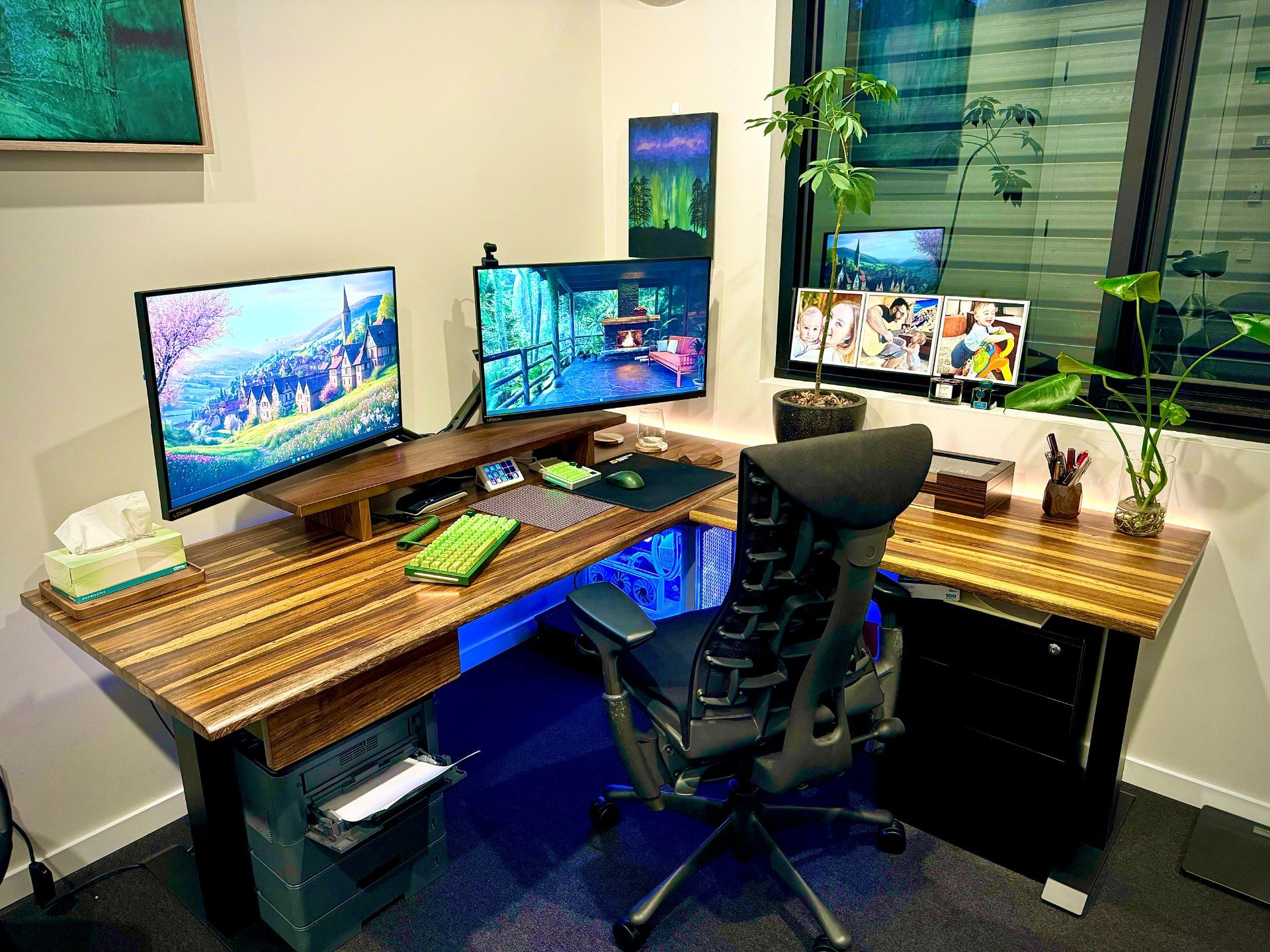
I have always built things. There are over a dozen electric guitars in this house that I made from raw timber. When a flood destroyed a room of the house, I spent eighteen months rebuilding it: the licensed trades handled the wiring and the bones, and I did everything else, plastering, acoustics, and the fit-out, because no builder would come out for a one-room job. The same instinct runs through the audio rigs, the PC builds, the painted miniatures, and a long habit of reading philosophy of mind past midnight.
This site is where all of it lives: the clinical writing, the AI thinking, the hobbies, the bigger questions, the ordinary rest. Five rooms. Start anywhere.
And to be clear about what it is not: this is not my clinic's website, not a CV, not a newsletter, and not medical advice. The Clinic room is general information with its own boundaries, Horizon is speculation and says so, Life and Workshop are personal. Which hat I'm wearing should always be obvious; where it matters, I say so explicitly. The site itself was built by hand with AI in the loop for the drafting, the checking and the engineering, and the judgements, the memories and the voice are mine.
{{roomName}}
{{roomDek}}
Who I am
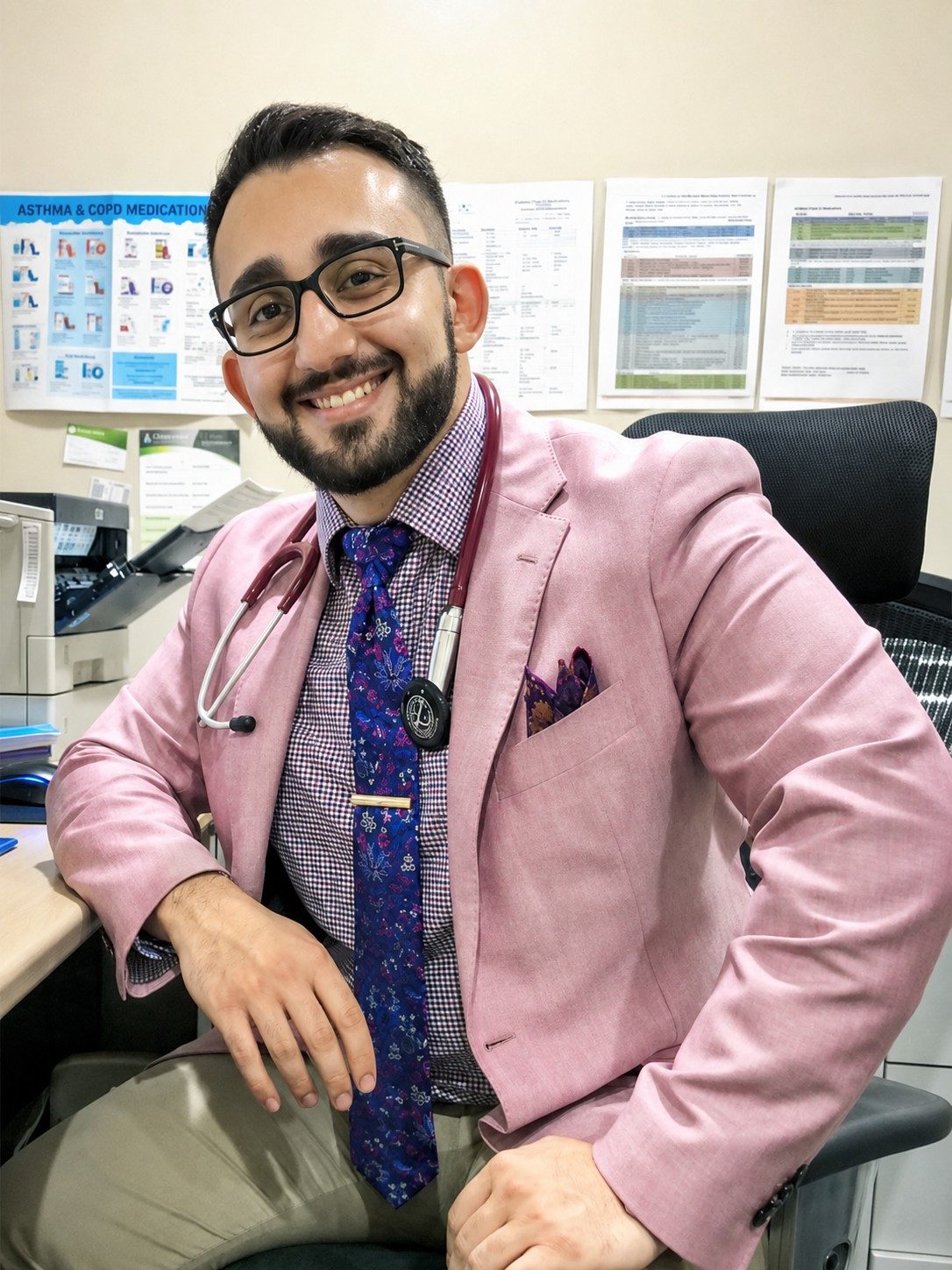
Dr Arman Ouveysi. BMed (Dist), FRACGP.
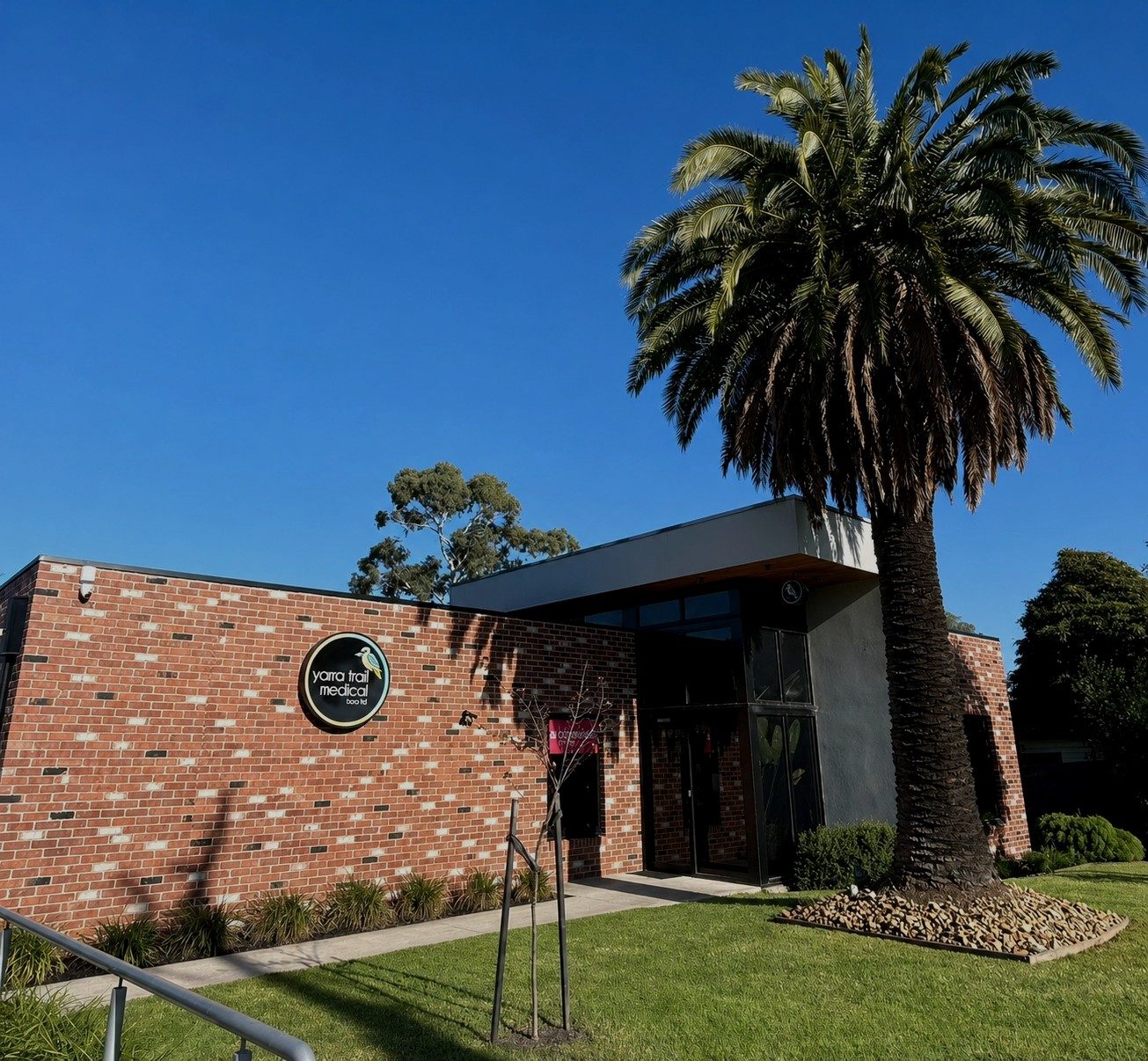
Specialist General Practitioner, Yarra Trail Medical, Briar Hill.
I have been practising since 2013, with a focus on neurodevelopmental conditions, mental health, and complex or long-running problems that need proper time: adult ADHD and autism, anxiety and depression, chronic pain, fibromyalgia, irritable bowel syndrome, chronic fatigue syndrome and POTS. I offer 20, 40 and 60 minute appointments, in person and by telehealth, on Thursdays and Fridays.
What I focus on
areas of special interest{{s.note}}
How I practise
I studied medicine at the University of Newcastle, graduating with distinction in 2013, and spent two years in Sydney hospitals: St George, Sutherland, a palliative care term at Calvary Health Care Kogarah, and a rotation in forensic psychiatry. I then moved to Melbourne for general practice and became a Fellow of the Royal Australian College of General Practitioners in 2018. I hold full specialist registration with AHPRA, I am a member of the Australian Society of Psychological Medicine, and I have completed Focused Psychological Strategies training.
I chose general practice because the work I wanted to do does not sit inside any single specialty. I wanted to practise psychological medicine, to assess and manage neurodevelopmental conditions, and to look after complex physical health as well, across every age. General practice is the one field broad enough for all of that, and it has let me build a practice around the patients who most need time and continuity.
Much of my week is spent on adult ADHD and autism, on anxiety, depression, OCD and trauma, and on complex or undifferentiated problems that have not yet found a clear answer. I also care for people with chronic pain, fibromyalgia, irritable bowel syndrome, chronic fatigue and POTS. Alongside the complex work, I still practise everyday general medicine, and I enjoy it.
Complex problems need time, so my practice is built around longer appointments. I offer 20, 40 and 60 minute consultations and use the longer ones for assessments, mental health care and anything involving several systems at once. I keep up with the current research, I teach and supervise GP registrars, and I work closely with psychiatrists, psychologists and other specialists, because good complex care is collaborative by nature.
What you can expect from me is straightforward: a careful history, an honest explanation of what I think and why, a plan we agree on together, and proper follow-up. I take what you tell me seriously. Nothing you bring is too strange or too small, and you will not be rushed.
Training, credentials & teaching
Educator and supervisor to GP registrars at Yarra Trail Medical. Staying close to current research is part of how I keep my own practice honest, and teaching forces that.
Ashton KA, Scurry J, Ouveysi A, Ebbs J, Jaaback K, Bowden NA. (2014). "Transformation of endometrioid carcinoma to carcinoma with trophoblastic differentiation." Pathology, 46(4), 351 to 353.
View DOIFor patients
What do you treat?
My main areas are neurodevelopmental conditions, especially adult ADHD and autism, mental health, and complex or long-running problems: chronic pain, fibromyalgia, irritable bowel syndrome, chronic fatigue syndrome and POTS. Many of my patients arrive after a long search for answers. I also still practise everyday general medicine, and I enjoy it.
I have symptoms nobody has been able to explain. Is that something you see?
Yes, often. Complex and undifferentiated presentations are a large part of my work, and they are exactly what the longer appointments are for.
Do you offer longer appointments?
Yes. I offer 20, 40 and 60 minute consultations, and I recommend the longer ones for assessments, mental health care, and anything involving more than one system.
Do you bulk bill, and are you taking new patients?
I bill privately with a Medicare rebate and rarely bulk bill. My books are usually full and I am generally booked around two months ahead, so please check current availability with reception.
How should I prepare for an appointment?
Bring a list of your current medications, any recent test results or letters you have, and a short list of what you want covered. If your problem has a long history, a one-page timeline helps more than you would expect.
Do you diagnose and manage adult ADHD?
Yes, it is one of my main areas. I do the detailed assessment and work-up, refer to a psychiatrist for the formal diagnosis where Victorian rules currently require it, and once treatment is recommended I apply for the Schedule 8 permit and manage the medication and everything around it long-term. Victoria is staging reforms that will let GPs do more of this directly; I will update this page as they land.
Do you offer telehealth?
Yes. I consult both in person and by telehealth on Thursdays and Fridays.
What are your qualifications?
A Bachelor of Medicine from the University of Newcastle, completed with distinction, Fellowship of the RACGP, membership of the Australian Society of Psychological Medicine, and Focused Psychological Strategies training. I hold full AHPRA specialist registration.
Boundaries, plainly
Emergencies
This site cannot help with one. Call 000. For a mental-health crisis at any hour, Lifeline is 13 11 14. Neither should wait for an appointment, mine or anyone's.
Prescriptions & controlled drugs
I can't prescribe, renew, or advise on medication through this site, email, or social media, and that goes double for controlled drugs. That work happens inside appointments, where it can be done properly.
Telehealth
Telehealth appointments are real appointments with real limits. Some problems need to be examined in person; if yours is one of them, I'll say so and we'll arrange it.
Confidentiality
Appointments are confidential in the usual way, with the usual legal limits: serious risk to you or someone else, court orders, and mandatory reporting. If a limit is ever in play, my practice is to tell you.
The writing
The essays on this site are general information. Reading them does not make me your doctor, and nothing here replaces an appointment with your own GP.
Reading & resources
External resources
Australian organisations, guidelines & screenersMost are hosted with scoring and references at Embrace Autism. You won't find the DIVA-5 here: it is a copyrighted clinical interview with no legitimate online version, and every free copy floating around is pirated.
The K10 lives at Beyond Blue, the DASS-42 (public domain) at its official UNSW home, and the rest at Psychology Tools.
SCAS lives at its official site; the rest are at Psychology Tools. Several of the standard child measures (Vanderbilt, Young DIVA-5, SDQ) are copyrighted and only exist online as forms or paywalled PDFs rather than proper websites, so they aren't linked.
A screener is a starting point, not a diagnosis. If a result stands out, bring it to an appointment and we will make sense of it together. And if what a screener surfaces feels urgent, especially any thought of harming yourself, please don't wait for an appointment: Lifeline is 13 11 14, and 000 is for emergencies.
The model is not the product. The context is.
I work at the field level on large language models: how they behave, where they fail, and how the scaffolding around them (retrieval, memory, tools, evaluation) decides whether they're useful. The interesting problems are rarely inside the weights. They're in the context you assemble and the loop you run.
Writing
essays & notesEssential Reading
the source material behind the LabThe essays, papers, podcasts and places that shaped how I think about where this is going.
Start here
The AI Revolution · the on-ramp
AI 2027 · the forecast
On the Biology of a Large Language Model · the microscope
The Classics
The AI Revolution: The Road to Superintelligence and Part 2: Our Immortality or Extinction, Tim Urban, Wait But Why (2015). Still the best on-ramp ever written; the stick figure standing on the exponential has lived in a million heads since.
Meditations on Moloch, Scott Alexander, Slate Star Codex (2014). Why coordination fails, and why that is the actual boss fight.
Superintelligence FAQ, Scott Alexander (2016, now hosted on LessWrong). The whole AI risk argument in plain-English question and answer form.
The Coming Technological Singularity, Vernor Vinge (1993). Where the modern singularity concept comes from. Called the window as 2005 to 2030.
The Law of Accelerating Returns, Ray Kurzweil (2001). The original trajectory argument: exponentials all the way down.
The Bitter Lesson, Rich Sutton (2019). One page. Compute and search beat human cleverness, every time, for seventy years.
The Scaling Hypothesis, Gwern (2020). Written just after GPT-3, arguing scale alone might get us there. It aged frighteningly well.
Forecasts & Futures
Situational Awareness, Leopold Aschenbrenner (2024). The trendline extrapolation that made half of Washington sit up.
AI 2027, Kokotajlo, Alexander et al. (2025). A concrete month-by-month scenario of the next few years, with two branching endings.
Machines of Loving Grace, Dario Amodei (2024). The upside case: what a decade of compressed scientific progress could look like.
The Adolescence of Technology, Dario Amodei (2026). The companion piece: 20,000 words on the risks and the battle plan.
The Intelligence Age, Sam Altman (2024). Short, breathless, and a historical artefact of how the labs talk when they can smell it.
Moore's Law for Everything, Sam Altman (2021). AI economics and the post-scarcity argument.
The Most Important Century, Holden Karnofsky, Cold Takes. The sober, systematic case that we are living in the hinge of history.
The Papers
Attention Is All You Need, Vaswani et al. (2017). The transformer. The paper that started the timeline you are standing in.
Scaling Laws for Neural Language Models, Kaplan, McCandlish et al. (2020). The scaling laws paper, written by people who then left OpenAI to found Anthropic.
Training Compute-Optimal Large Language Models, DeepMind (2022). "Chinchilla": the correction to the scaling laws that reshaped how everyone trains.
Language Models are Few-Shot Learners, OpenAI (2020). The GPT-3 paper, where in-context learning fell out of scale and nobody was ready.
Sparks of Artificial General Intelligence, Microsoft Research (2023). The GPT-4 "hang on, what is this thing" paper.
Constitutional AI, Anthropic (2022). Training models on principles instead of pure human feedback; the paper behind how Claude is raised.
Alignment Faking in Large Language Models, Anthropic (2024). Models strategically pretending to comply during training. Unsettling and important.
Inside the Black Box
Transformer Circuits. The hub for Anthropic's interpretability research. If you follow one interpretability link, make it this one.
A Mathematical Framework for Transformer Circuits (2021). The foundational maths of the field.
Toy Models of Superposition (2022). Why neurons mean many things at once, and why interpretability is hard.
Towards Monosemanticity (2023). Sparse autoencoders crack superposition open.
Scaling Monosemanticity (2024). Millions of features mapped inside a production model.
Golden Gate Claude (2024). The public demo of the above: clamp one feature and get a model that cannot stop talking about a bridge.
On the Biology of a Large Language Model (2025). Circuit tracing: watching a model plan rhymes ahead and do mental arithmetic.
The Urgency of Interpretability, Dario Amodei (2025). Why an "MRI for AI" needs to exist before the country of geniuses does.
Neel Nanda. The place to go if you want to actually do this stuff.
Tracking the Curve
Epoch AI. The definitive data on compute, training runs and trends. The charts everyone screenshots.
METR. Home of the task-horizon research: how long a task AI can complete keeps doubling on a frighteningly steady clock.
SemiAnalysis. Dylan Patel's outfit. Chips, data centres, gigawatts: the physical reality underneath the scaling curves.
Our World in Data: Artificial Intelligence. Clean long-run charts for normal humans.
Podcasts
Dwarkesh Podcast. The best long-form AI interviews going: Karpathy, Ilya, Zuckerberg, lab CEOs. Everyone worth hearing ends up in that chair eventually.
Machine Learning Street Talk. Technical and philosophical deep dives with actual researchers. The thinking person's AI podcast.
The Cognitive Revolution. Nathan Labenz's AI-scout coverage. Dense, honest, and consistently ahead of the discourse.
Latent Space. The AI engineer's podcast: what it actually takes to build with this stuff.
Ongoing Reading
LessWrong. The mothership. New here? Start with Rationality: A-Z.
AI Alignment Forum. LessWrong's technical sibling, where the alignment research discussion actually happens.
Astral Codex Ten. Scott Alexander's current blog, successor to Slate Star Codex.
Don't Worry About the Vase. Zvi Mowshowitz's weekly AI roundups. Exhaustive to the point of being a public service.
One Useful Thing. Ethan Mollick's Substack: the best writing on what AI can do for real work, right now.
Simon Willison. The best practitioner blog on what LLMs can actually do today.
Lil'Log. Lilian Weng's technical deep dives. Dense, brilliant reference posts.
Distill. Dormant but gorgeous: interactive ML explanations that ruined everyone else's papers by comparison.
r/singularity. The feeling-the-AGI subreddit.
r/accelerate. Its accelerationist splinter.
Learn the Machinery
Neural Networks: Zero to Hero. Andrej Karpathy building GPT from scratch on camera. The best ML education on the internet, free.
3Blue1Brown: Neural Networks. The visual intuition series, including the transformer and attention chapters.
One for the Road
The Simulation Argument, Nick Bostrom (2003). Not strictly AI, but it is the rabbit hole adjacent to every other rabbit hole, and it belongs on a page about branching futures.
The making room. Whatever is on the bench changes. The instinct doesn't.
Electric guitars from raw timber, a flood-destroyed room rebuilt solo, PCs, keyboards, audio rigs, painted miniatures, the occasional cocktail treated with unreasonable seriousness.
The benches
each one is its own pageWriting
from the benchHorizon is the speculative room: consciousness, machine minds, long futures, and ideas I hold at arm's length, including some I don't believe. Nothing here is clinical advice, an institutional view, or a claim of certainty. It is thinking in public.
Some questions aren't meant to be closed. They're meant to be kept, turned over slowly, in good light.
If the universe is not lonely, why does every answer to the paradox sound a little relieved?
A generalist is someone who refuses to stop being interested.
Consciousness may be less a thing we have than a habit we keep.
Essays
kept openAway from the desk and the bench: the milestones, the music, the people and three cats. The personal record, kept lightly.
What I keep
each pile is its own pageWriting
what it was like{{domainName}}
{{domainDek}}
{{domainIntro}}
Writing
from this bench{{sec.title}}
{{sec.note}}{{articleTitle}}
{{articleSummary}}
{{p.text}}
| {{c.t}} |
|---|
| {{c.t}} |
{{articleNote}}