Why the long appointment
What 20, 40 and 60 minute appointments are each for, and how to get the most out of them.
My practice is built around appointments of three lengths: 20, 40 and 60 minutes. This is not a luxury add-on. It is the working assumption of everything I do, because the problems I most often see cannot be assessed properly in less.
A standard consultation works well when the question is contained: one problem, a clear history, a known next step. Much of good general practice fits that shape, and I still do plenty of it. But a first assessment for possible ADHD, a mental health review, or an attempt to make sense of years of unexplained symptoms is a different kind of task. It needs an unhurried history, time to ask the follow-up questions, and space at the end to actually explain my thinking and agree on a plan. Compressing that helps nobody.
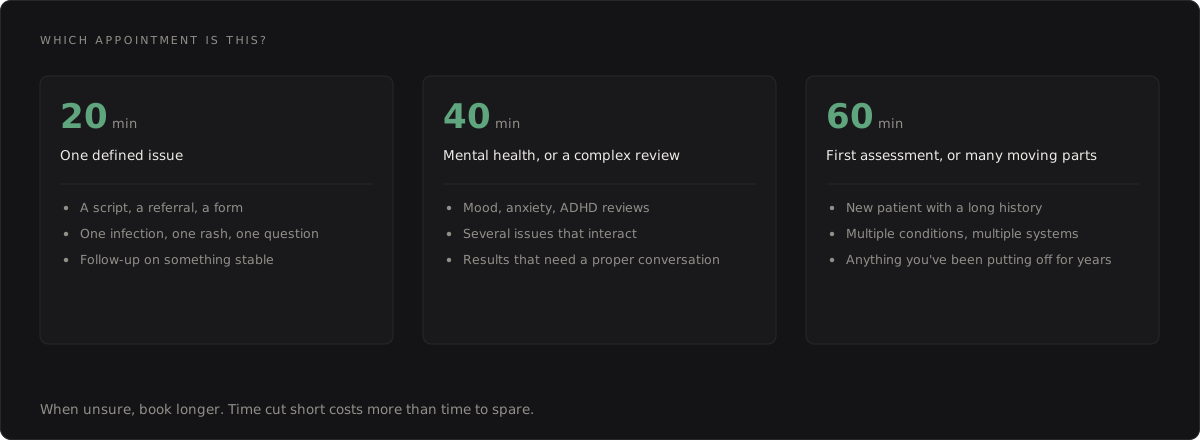
As a rough guide: a 20 minute appointment suits a single, defined issue or a routine review. A 40 minute appointment suits a mental health consultation, a complicated ongoing problem, or several issues that genuinely will not wait. A 60 minute appointment is for the big pieces of work: new assessments, complex multi-system problems, or a first visit where there is a long story to tell. If you are not sure which to book, reception can guide you, and it is always better to book long than to run out of time halfway through the important part.
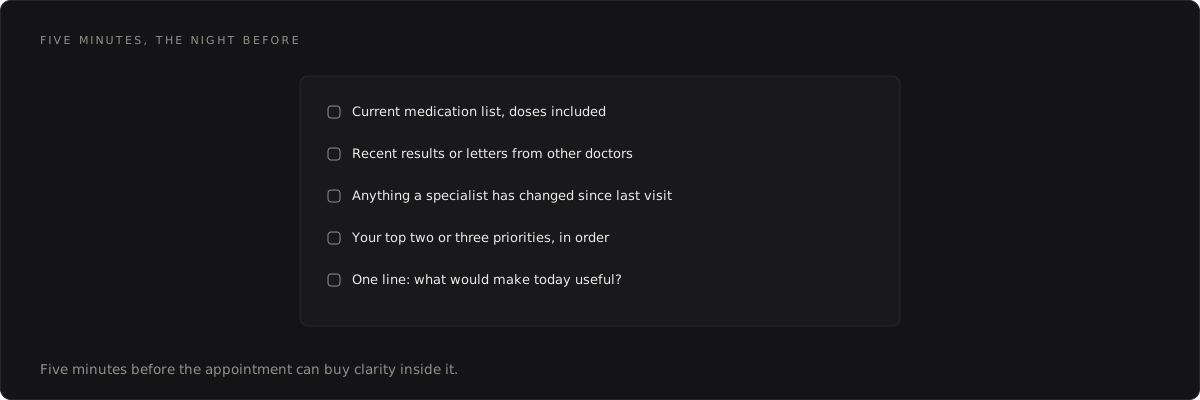
You can make any appointment worth more with five minutes of preparation. Bring a current medication list, copies of recent results or specialist letters if you have them, and a short written list of what you want covered, in order of importance. If your story is long, a one-page timeline of the major events beats an hour of reconstruction from memory. None of this is required. All of it helps.
The honest trade-off of this model is that longer appointments mean fewer of them, which is why my books are often full and why I bill privately with a Medicare rebate. I think the trade is worth it. Time is not a nicety in this kind of medicine. It is the treatment's first ingredient.
Prefer the full experience? Read this essay in the house. Machine-readable: markdown source.