What ADHD medication actually does
Stimulant medication is the most effective and most misunderstood part of ADHD treatment. What it does, what it does not do, and how prescribing currently works in Victoria.

Once an ADHD diagnosis is made, the conversation turns to treatment, and most of the questions I get asked are about medication. It is the treatment with the strongest evidence base we have for ADHD and also the most misunderstood, sitting somewhere between miracle and menace in the public imagination. It is neither. Here is the calm version. One boundary before the detail: nothing on this page can say whether medication is right for you. That takes an individual assessment, which is what the whole process below exists to do.
The main medications are stimulants: methylphenidate, dexamfetamine and lisdexamfetamine. The name causes half the confusion on its own, because giving a stimulant to someone who is restless and distractible sounds backwards. The resolution is that these medicines do not work by speeding a person up or slowing them down. They increase the availability of dopamine and noradrenaline in the brain networks that manage attention, prioritisation and impulse control. In ADHD, signalling in those networks is inefficient. The medication improves the signal. What most people describe when the dose is right is not feeling stimulated at all. It is quiet: the sense that there is one thought in the queue instead of nine, that starting a task no longer requires a run-up, that the intention and the action are finally connected by a shorter piece of string.
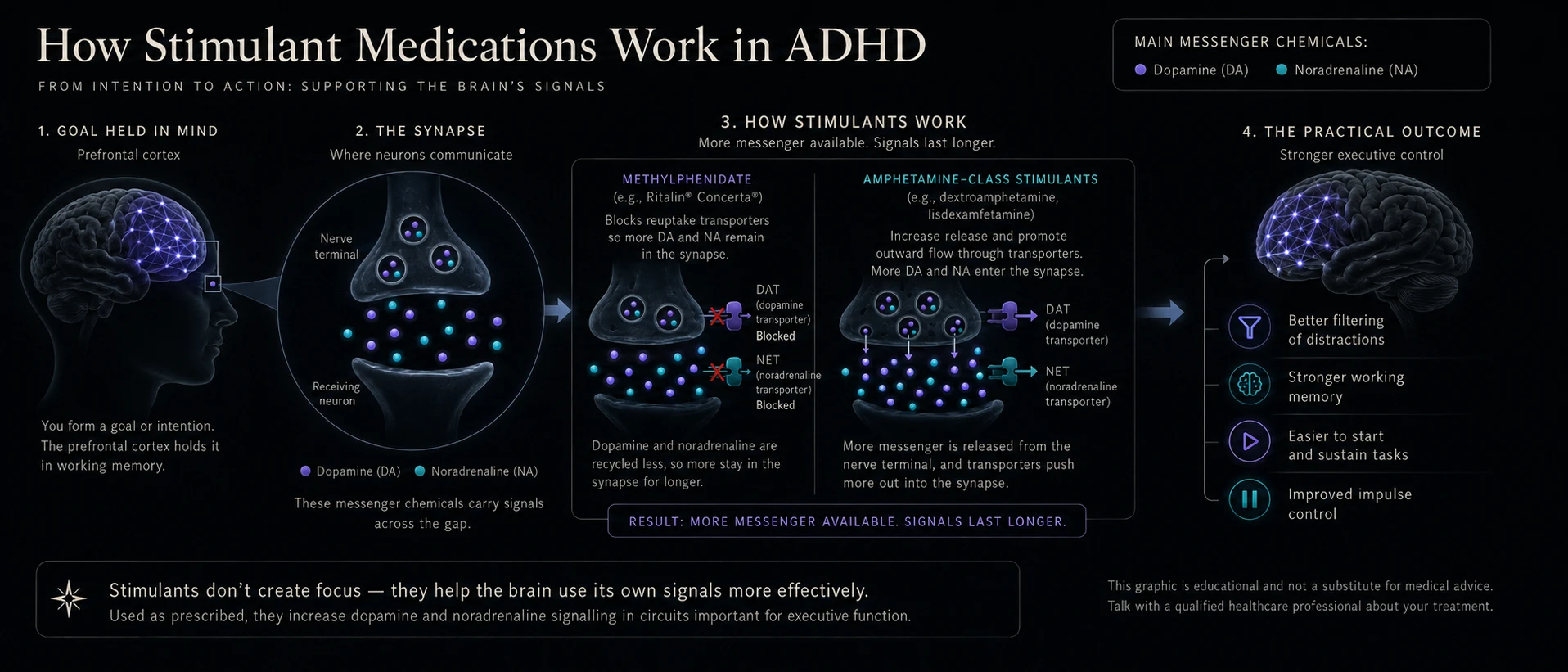
It is worth being equally clear about what medication does not do. It does not change who you are. It does not install motivation, organisation or wisdom; it makes those things possible to apply, which is different. It does not teach the skills that decades of untreated ADHD never allowed to develop, which is why the people who do best usually pair medication with structure and, often, some psychology input. And it does not work identically for everyone. A meaningful majority of adults get substantial benefit, some get a modest benefit, and some find the side effects outweigh the gains. All three outcomes are informative, and none of them is a failure on the patient's part.
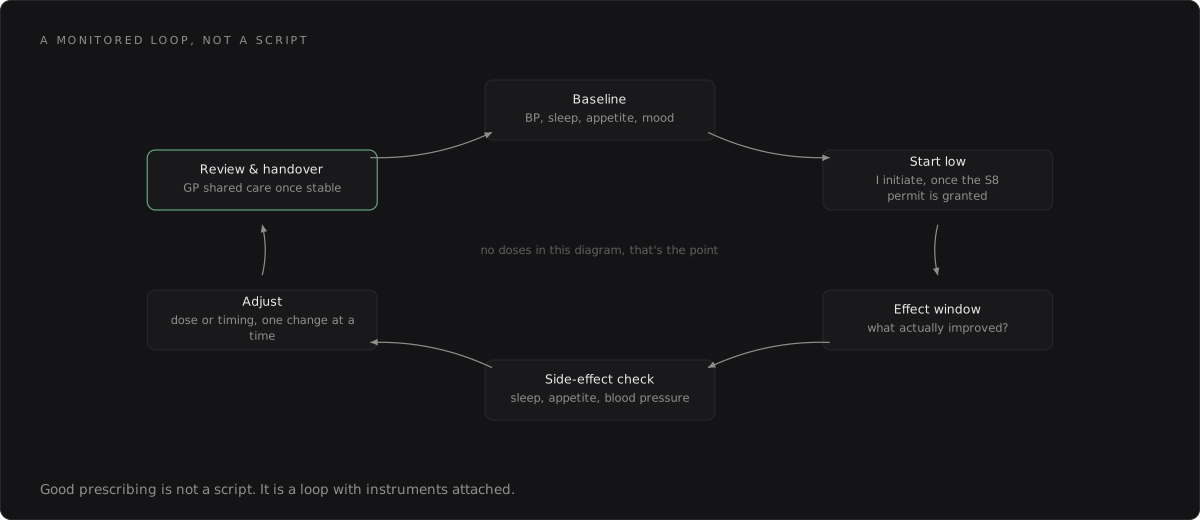
Finding the right medication and dose is a process, not a prescription. Stimulants act within an hour and wear off the same day, which makes them unusually testable: you can tell within days whether a dose is doing something, and we adjust. Expect a period of weeks where we trial, review honestly and tune. Your feedback is the instrument here. "Better" is useful; "I could finish the report but I wasn't hungry until 8pm and slept badly" is gold.
Side effects deserve a straight paragraph rather than fine print. The common ones are reduced appetite, difficulty sleeping if the medication is active too late in the day, a modest rise in heart rate and blood pressure, and sometimes irritability or a flat, wrung-out feeling as a dose wears off. Most are manageable by adjusting the dose, the timing or the specific medication, which is exactly what the review appointments are for. Rarer but serious effects deserve a sentence of their own: stimulants carry a potential for dependence and misuse, and can uncommonly trigger significant mood changes or psychotic symptoms; anything in that territory means stopping and talking to me promptly. This is also why monitoring exists: blood pressure, heart rate and weight get checked, and anyone with significant heart history needs that assessed properly before starting. These are Schedule 8 medicines, the most tightly regulated class we prescribe, and the monitoring is not bureaucratic theatre. It is what responsible use of an effective drug looks like.
Two practical notes that I would rather say plainly than have you discover awkwardly. First, prescriptions for these medicines are tracked through Victoria's real-time prescription monitoring system, and pharmacies check it. This is normal and protects everyone. Second, store the medication like the controlled drug it is, and do not share it, ever, including with a family member who suspects they have ADHD too. The correct route for that family member is an assessment, and I am happy to help with that instead.
For those who cannot take stimulants or prefer not to, non-stimulant options such as atomoxetine exist. They work differently, take weeks rather than hours to show their effect, and are a genuine alternative rather than a consolation prize for some people.
Finally, the rules, because in Victoria they shape the journey. As things currently stand, the formal diagnosis sits with a specialist, usually a psychiatrist, and what comes back to me is a letter recommending treatment. From there the work is mine: I see you, apply for a Schedule 8 treatment permit, and wait the two to four weeks the permit usually takes. Once it arrives, we meet again and, if everything still looks right, I initiate the medication and manage the prescribing from then on, with periodic specialist review. That ongoing phase, the tuning, monitoring and long-term management, is where I do most of my ADHD work. Victoria announced reforms in early 2026 that will train GPs to diagnose and initiate treatment themselves, with training for the first GPs starting from September 2026 and the pathway expected to open in stages once the framework is in place. It is not in effect at the time of writing. I will update this page when it changes, because it will meaningfully shorten the road for a lot of people.
Medication is one strong tool, most powerful when it is aimed well: right diagnosis first, honest titration, sensible monitoring, and the structure around it that turns restored attention into a changed week. That whole arc is the treatment. The tablet is just where it starts.
Prefer the full experience? Read this essay in the house. Machine-readable: markdown source.