What an adult ADHD assessment actually involves
What a proper adult ADHD work-up looks like, why it takes time, and how the pathway currently works in Victoria.

Most adults who ask about ADHD have been thinking about it for a long time before they say it out loud. Sometimes a child's diagnosis started it, because the paediatrician's checklist described the parent just as well. Sometimes it is a run of jobs or courses that fell apart for the same reason. By the time it is raised in a consultation, the question is usually serious, and it deserves a serious answer rather than a quick impression either way.
An adult ADHD assessment is a structured piece of work. The core of it is history: what your attention, organisation, restlessness and impulsivity have looked like across your life, not just this year. ADHD is a developmental condition, so evidence that traits were present in childhood carries real weight. School reports, a parent's or sibling's recollections, or your own clear memories of how school actually went are all useful. Rating scales have a place, but they are an adjunct. A questionnaire score alone is not a diagnosis, and a good assessment never rests on one.
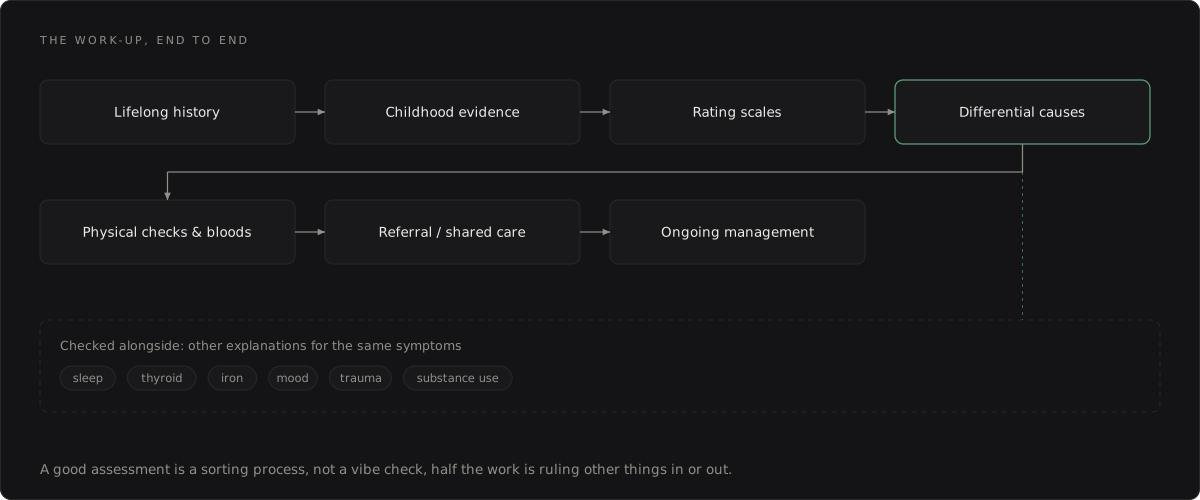
Just as important is what else could explain the picture. Poor sleep, sleep apnoea, thyroid disease, iron deficiency, depression, anxiety, trauma and substance use can all produce concentration problems that look like ADHD from the outside. Some of these also travel together with ADHD, which is exactly why the sorting-out takes time and care. Part of a proper work-up is checking for these, sometimes with blood tests, so that whatever is treated is actually the thing causing the trouble.
In Victoria, as the rules stand, the formal diagnosis sits with a specialist, usually a psychiatrist, whose letter recommends treatment. What a GP with an interest in this area does is everything around that: the thorough initial assessment, the screening for other causes, a well-prepared referral that shortens the specialist's job, and then the prescribing itself. With the specialist's letter in hand, I apply for a Schedule 8 treatment permit, which takes two to four weeks to come through; once it is granted, I initiate the medication and manage it long-term, with periodic specialist review. In practice this means the specialist visit is one step in the middle of a longer relationship, not the whole story.
Those rules are changing. Victoria announced reforms in early 2026 that will train GPs to diagnose ADHD and initiate treatment themselves, with training for the first GPs starting from September 2026 and the pathway expected to open in stages once the framework is in place. Other states are already further along. I will update this page as the Victorian framework comes into effect, because it will meaningfully change waiting times and costs for a lot of people.
Treatment, when it comes, is broader than a script. Medication helps many people substantially, and getting the choice and dose right for a specific person takes patient adjustment and honest feedback about side effects. But the durable gains usually come from pairing medication with structure: sleep, exercise, external systems for memory and planning, and sometimes psychology input for the habits and self-criticism that decades of undiagnosed ADHD tend to leave behind. None of that is glamorous. It works anyway.
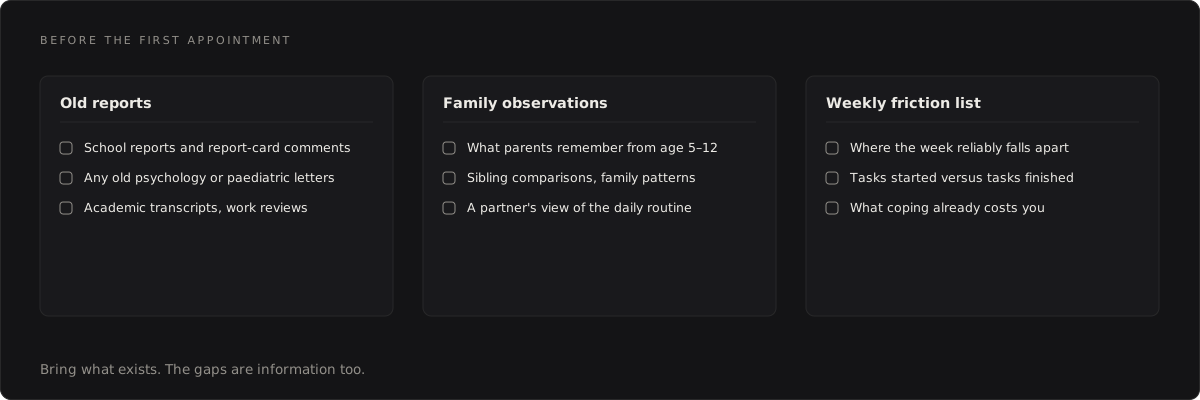
If you are considering an assessment, the most useful thing you can do beforehand is gather history: old school reports if they exist, a family member's observations, and a plain list of where things go wrong in your week. Bring that to a long appointment. It is the difference between starting the process and starting it well.
Prefer the full experience? Read this essay in the house. Machine-readable: markdown source.