The room the flood built
A flood destroyed the best room in my house. The licensed trades handled the bones; nobody wanted the rest of a one-room job, so I spent eighteen months doing it myself, and the room I have now could only exist because of the one I lost.
Water doesn't smash anything. That's the thing nobody tells you about floods. Fire is dramatic, burglary is violent, but water just arrives, sits there quietly, and takes everything anyway. About two years ago it arrived in the best room of my house: the room that held my desk, my listening setup, my gaming rig, the accumulated evidence of every hobby I'd ever refused to give up. By the time the water was gone, the room was still standing and completely dead. Carpet that would never be carpet again. Plaster drinking moisture up the walls like a wick. That smell, the one that tells you the damage goes deeper than anything you can see, and keeps telling you for weeks.

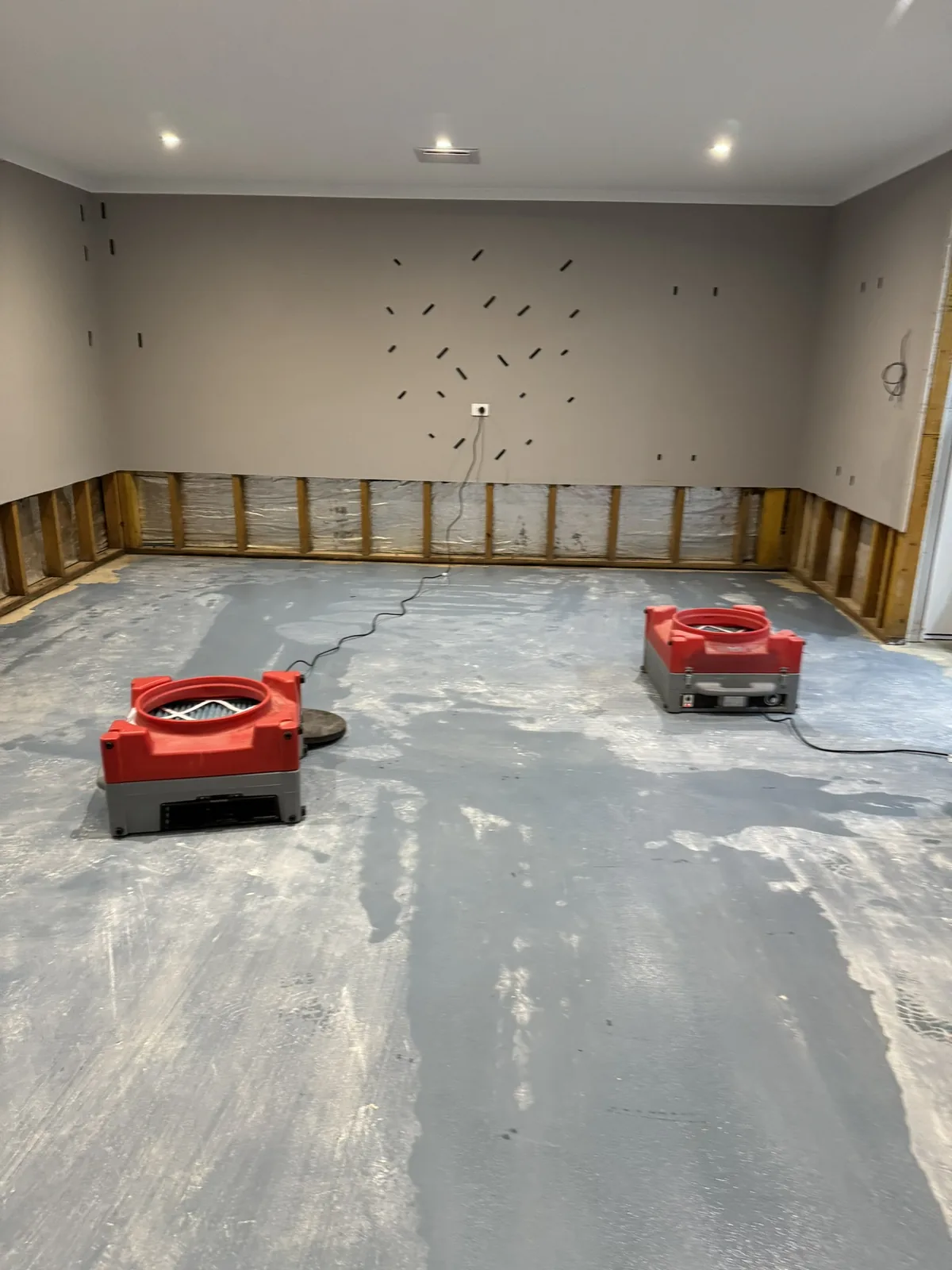
The insurance-and-cleanup phase of a story like this is boring and I'll spare you most of it. The part worth telling is what came after, when the room was stripped back and I started ringing tradies. Here is a thing I learned about the building industry that nobody warns you about: there is a size of job below which you functionally cannot buy help. A single room is too small. The good builders are booked a year out on extensions and don't return calls about one flooded room. The quotes that did arrive were priced the way you price a job you don't want. Weeks of this, and the room sat there, a skeleton of studs and stink, while I got progressively more annoyed.
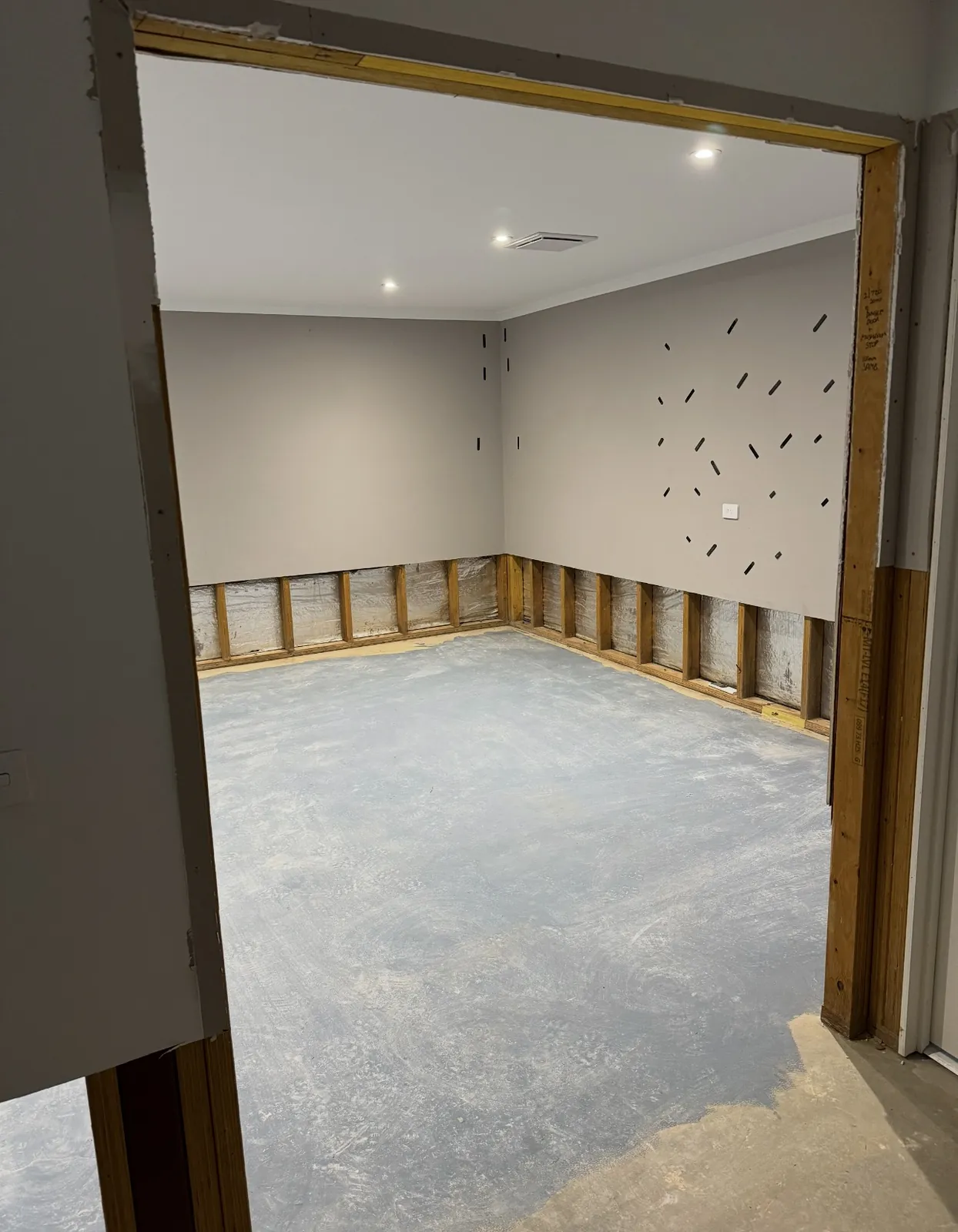
The decision, when it came, didn't feel like ambition. It felt like spite with a tool budget. Fine. Whatever didn't need a licence, I'd do myself.
I want to be honest about my qualifications at that moment, and about where the lines were. The bones of the job stayed with the people licensed to touch them: the restoration crew stripped the ruined lining out and dried the shell, the structure itself never needed me, and every millimetre of electrical work was done by a licensed electrician, to a plan I'd drawn long before he arrived. What nobody would take on was everything else: hanging and finishing plasterboard to a standard anyone should live with, building bulkheads and a lighting cove, treating a room acoustically from the frame out, and the hundred hours of fit-out and finishing no builder wanted attached to a one-room job. For that, I had qualifications for maybe a third of it. I'd been soldering and modding and building things my whole life; electronics didn't scare me, and neither did tools. What I had for the rest was the thing that has carried every project I've ever finished: the willingness to become a temporary obsessive expert in whatever the next fortnight requires. The internet is full of tradesmen who film their work, and I inhaled it. I read Australian standards documents for fun, which is a sentence I never expected to write. By the time I lifted the first sheet of plasterboard, I could have passed a pub quiz on fastener schedules.
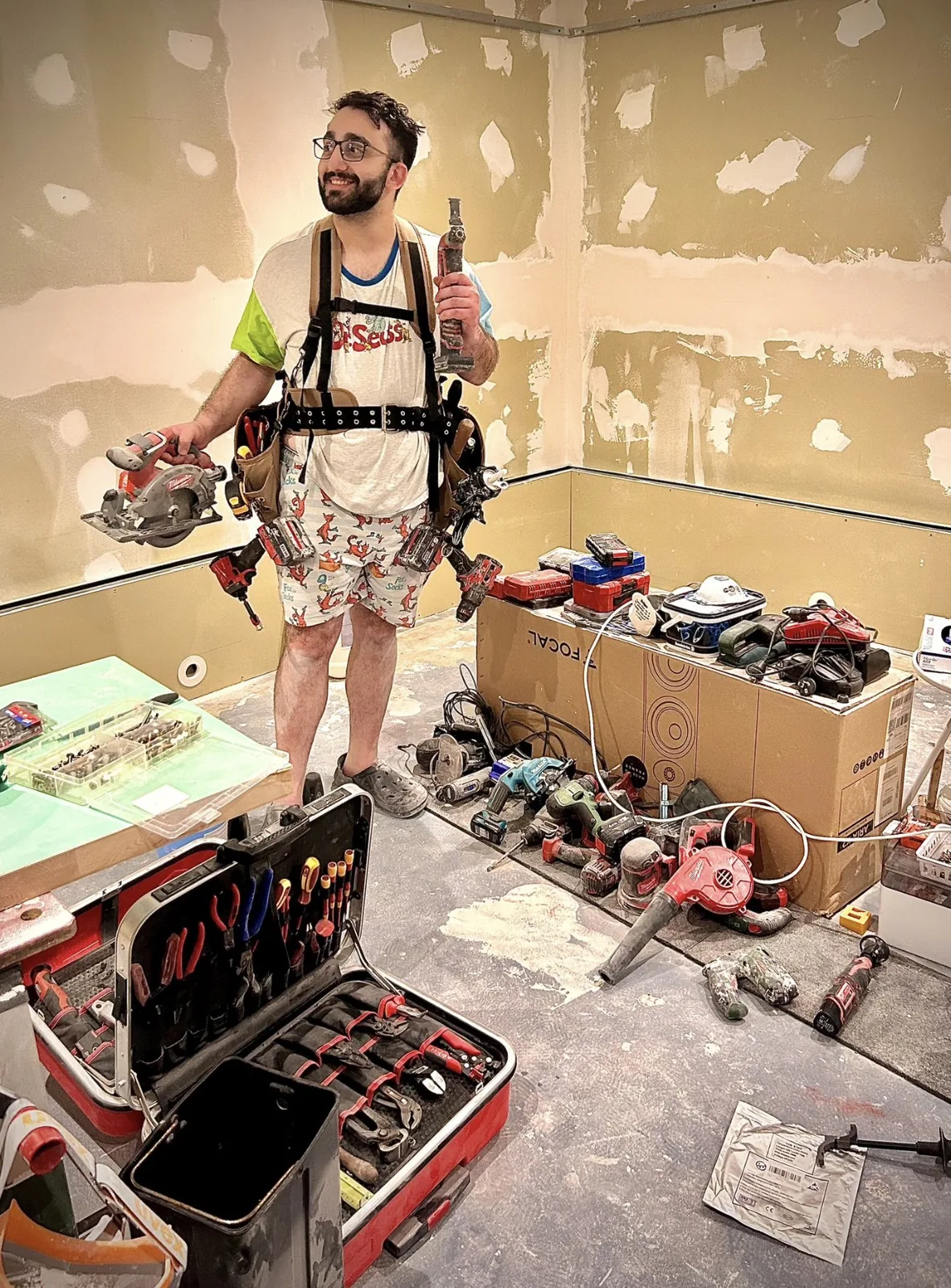
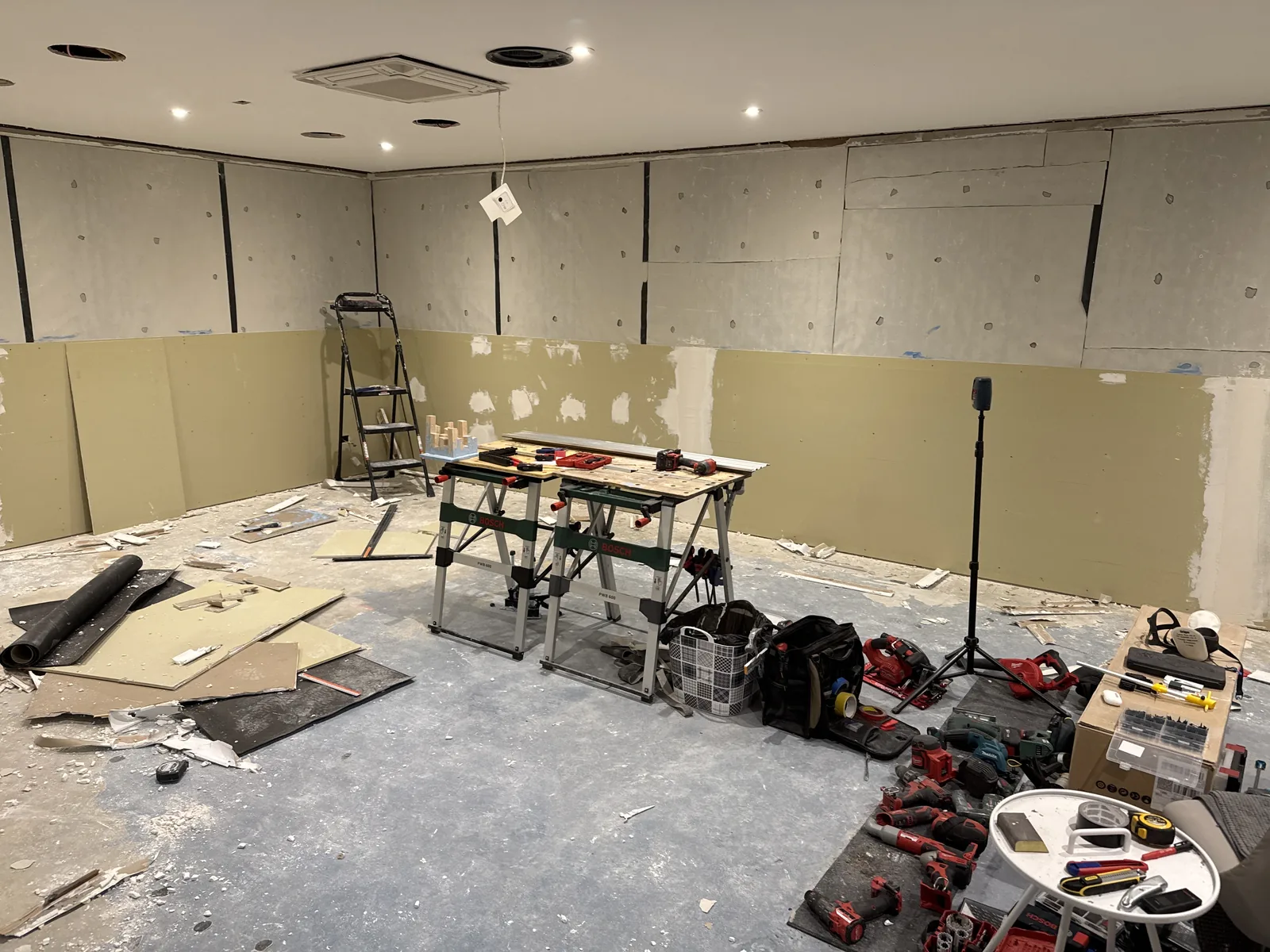
My part started with the least glamorous craft there is. Plasterboard is heavy, floppy, and completely indifferent to your feelings. Hanging it alone is a puzzle of props and panel lifts; finishing it is where the humility lives. Taping, setting, sanding, the three coats of patience between "sheeted" and "wall": my first joints were slow in a way that would have made a plasterer weep. Coat, doubt, sand, re-coat, discover the doubt was justified. But plaster is forgiving of patience if not of haste, and somewhere across those first weekends the walls stopped being an act of faith and started being walls again. There is a very specific pleasure, and I'd rank it against most pleasures I know, in running a hand down a wall you finished yourself and not finding the join.
Then the services, and here the division of labour matters: the electrician did the wiring; I did the wanting-it-exactly-there. The planning was mine, done with the thoroughness of a man who knew he'd never forgive himself for a regret buried in plaster. This is the great privilege of rebuilding a room you already lived in: you know exactly where every cable should have been the first time. Every power point that was in the wrong spot, every lead that ever crossed a floor, every "I'll tidy that one day": all of it went into the drawings I handed him, and all of it got answered before the walls closed, permanently. The first version of the room had accumulated over years, one compromise at a time. The second version got designed, and the difference between an accumulated room and a designed one turns out to be the difference between a share house and a home.
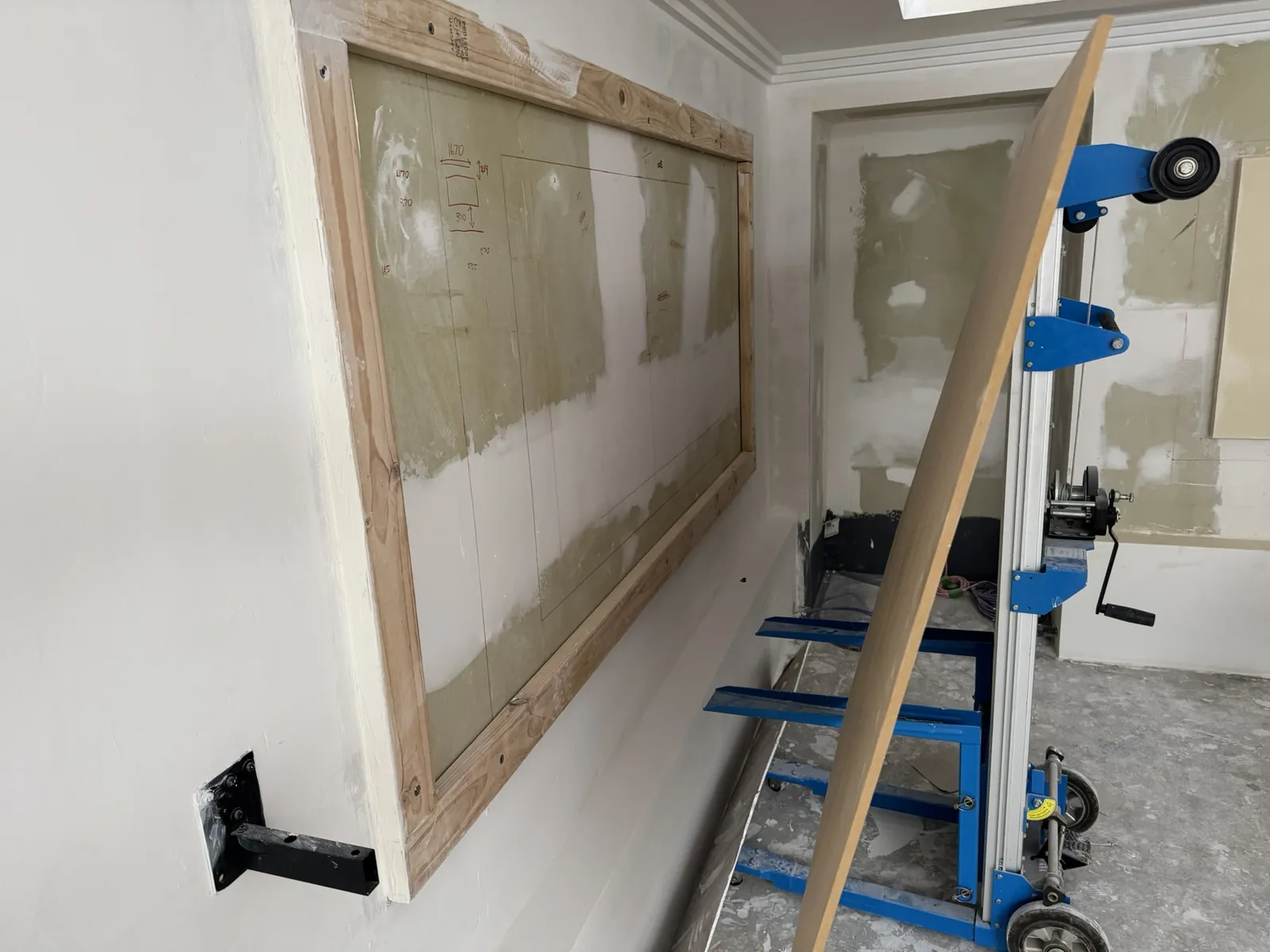
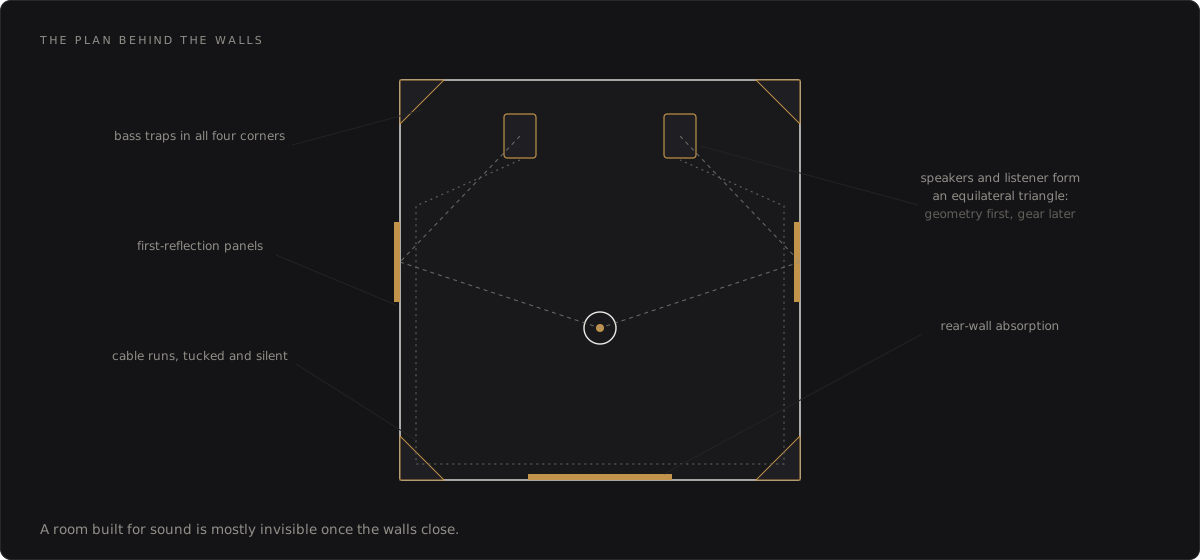
And then the part I'd secretly been waiting for, the part that turned a repair job into the project of my life so far: the acoustics. Because this wasn't just any room. This was the room where I listen to music, and I am, to a degree my family has learned to live with, unwell about how music sounds. For twenty years I had treated rooms after the fact: panels stuck on finished walls, bass traps wedged into corners as apologies. Now I had a room open to the studs and the chance almost nobody gets: to build the acoustics into the fabric. Insulation chosen for absorption, not just warmth. Bulkheads dropped and a lighting cove built where the geometry wanted them, not where a catalogue suggested. Wall treatment planned around where the listening position would actually be, first reflections hunted with a mirror and a torch before the plaster even went on. The geometry of the room considered as an instrument, because that's what a listening room is: the final component in the chain, and the one everyone else treats as given.
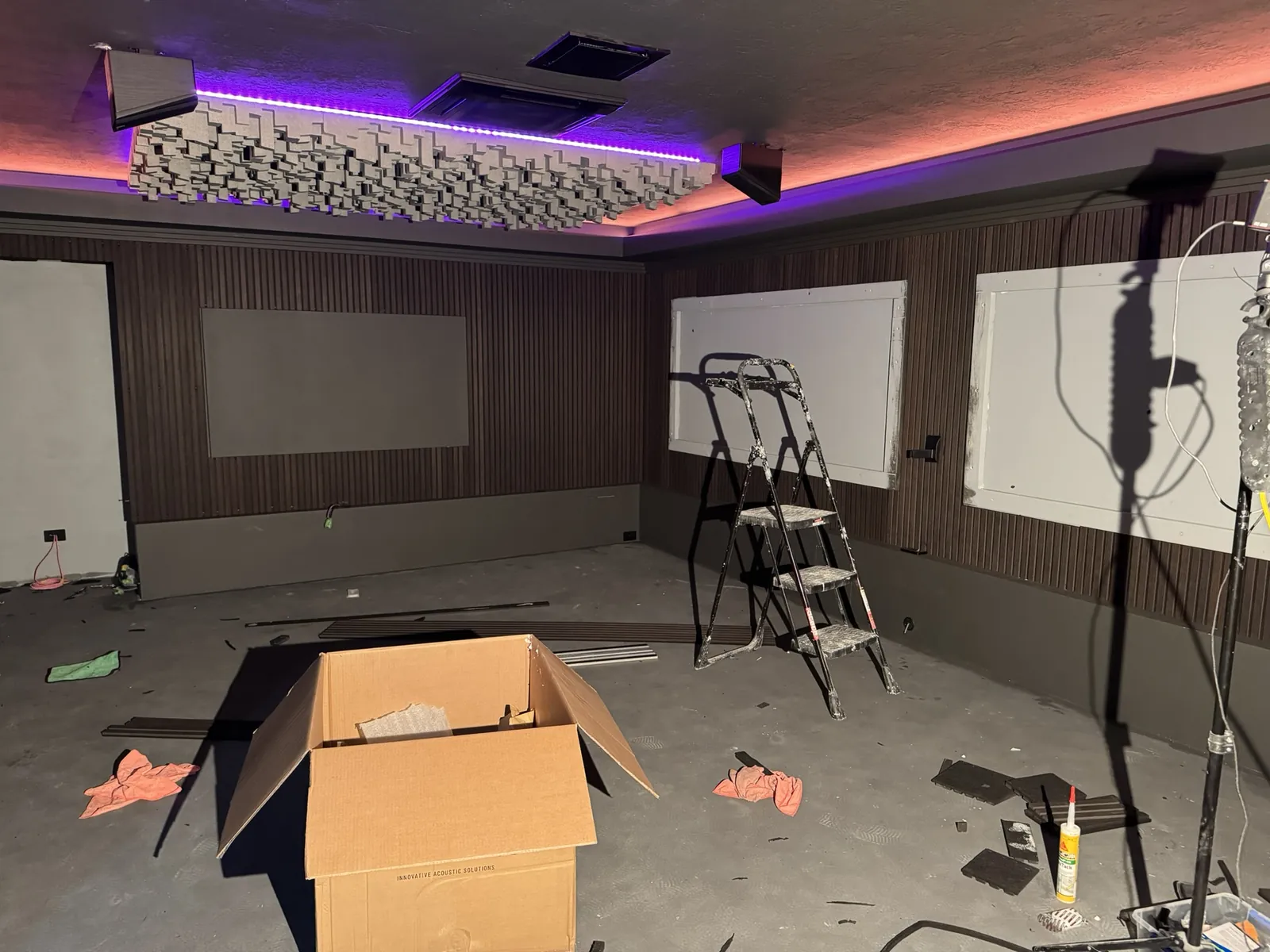
Eighteen months. That's what it took, and I want to be truthful about what eighteen months of evenings and weekends actually feels like, because the montage version is a lie. It feels long. Progress is measured in weekends, and some weekends produce nothing but a corrected mistake. There were stretches where the room was 80 per cent done for so long that 80 per cent started to feel like a permanent address. What kept it moving wasn't inspiration. It was the same dumb loop every long project runs on: do the next thing, then the next thing, and refuse to let a stall become a stop.
The room now is half home office and half everything else: theatre, gaming, the listening chair. It is, and I say this having grieved the original, better than what the flood took. Not because I'm a better builder than the people who made the first version, I'm certainly not, but because the second version is the only room I've ever been in where every single decision was made deliberately, by someone who knew exactly how the room would be used, because he was the one who'd be using it.
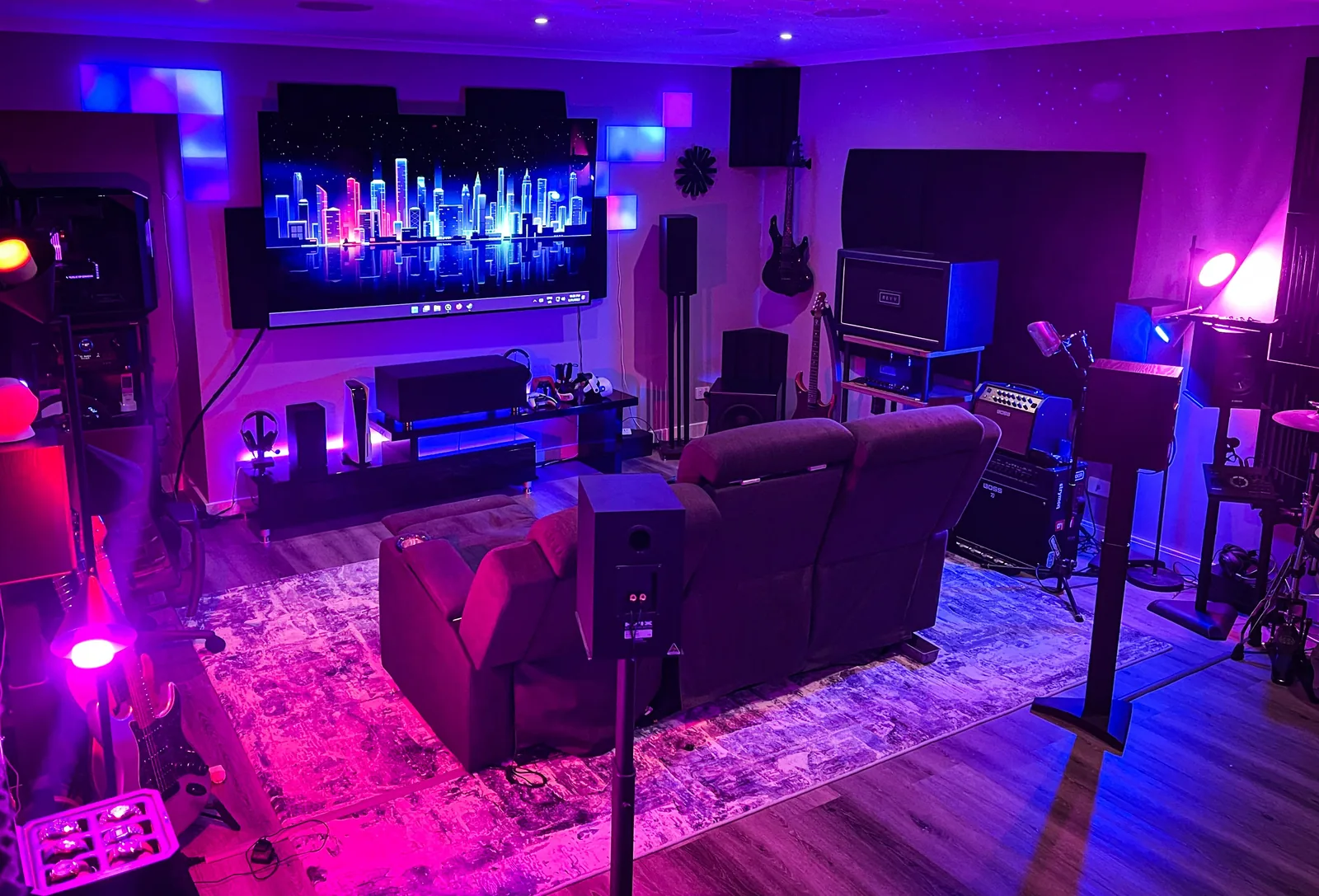
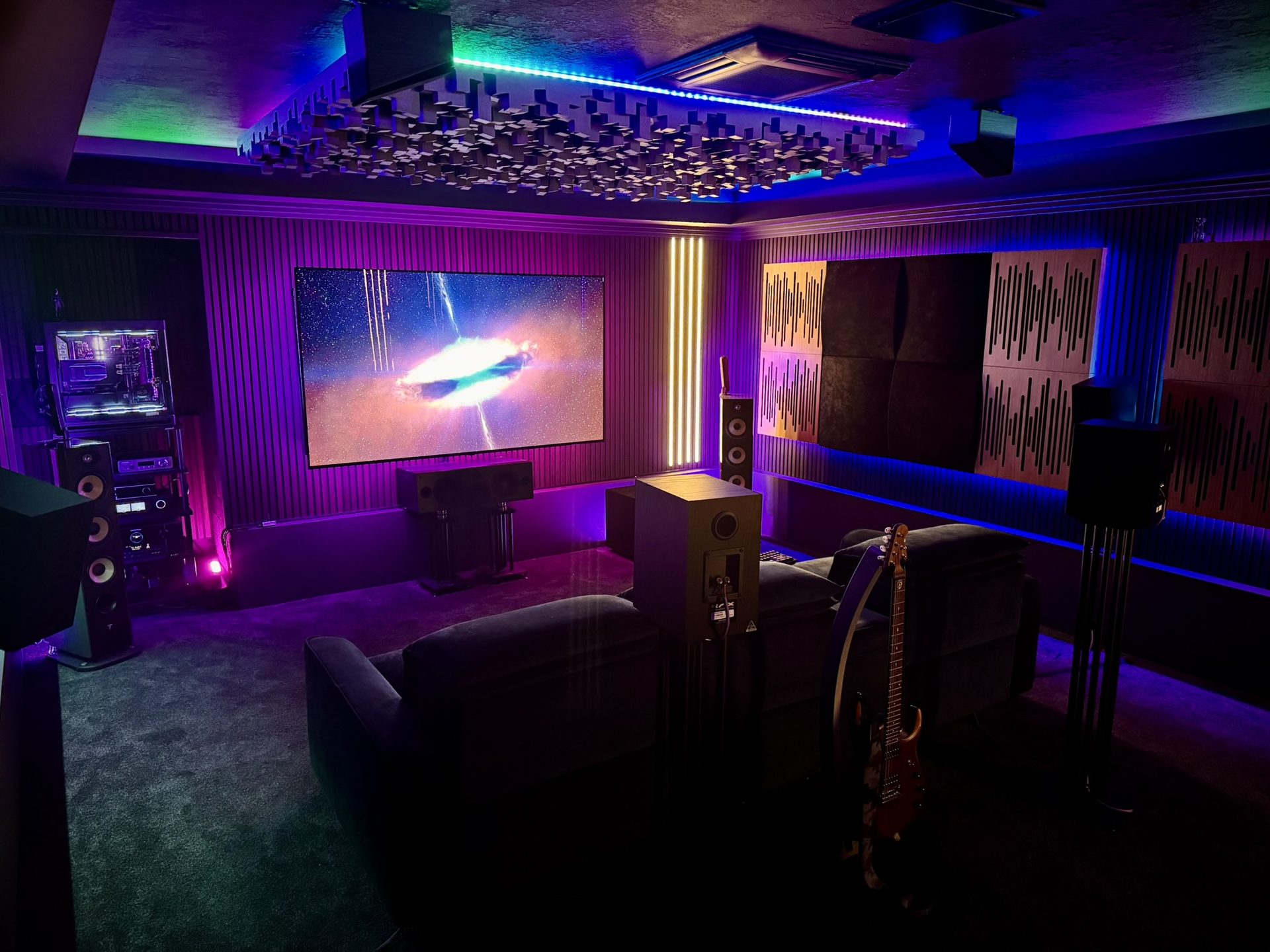
I'd never tell you I'm glad it flooded. But I'll tell you what I have now that I didn't before. When I sit in that room, working or playing or with the lights down and something loud on, I know what's behind every wall, because I either finished it with my own hands or drew exactly where it should go. There is not another room on earth I can say that about, and it turns out that's worth eighteen months.
Prefer the full experience? Read this essay in the house. Machine-readable: markdown source.