Recognising autism in adulthood
Why autism is often recognised late, what an adult assessment involves, and what a diagnosis does and does not change.

A growing number of the adults I see are asking, carefully and often after years of private research, whether they might be autistic. Many are surprised the question was never raised when they were children. It is worth explaining why late recognition is so common, because the reasons say a lot about what autism actually is.
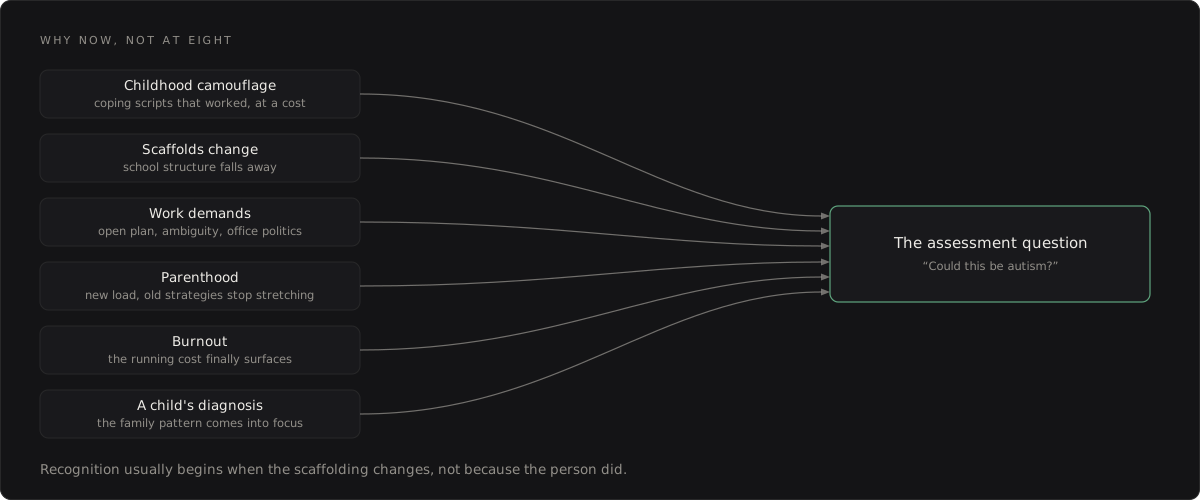
The picture most people grew up with was narrow: a young boy, obviously struggling, usually with delayed speech. Autism that did not look like that went unnoticed, and a lot of autism does not look like that. Many autistic people, and disproportionately many women, learn early to study social rules consciously and perform them: rehearsing conversations, copying expressions, suppressing discomfort. This is usually called masking, and it can be effective enough to carry someone through school and into a career while costing them enormously in private. The pattern I hear most often is not "I could not cope". It is "I coped, but the effort was crushing, and nobody could see it."
Adulthood tends to force the question when the scaffolding changes: a new job with more social demands, parenthood, burnout, or a child's diagnosis that reads like a family portrait. Sometimes it surfaces during assessment for something else, because autism and ADHD frequently occur together and one can hide behind the other.
An adult autism assessment is, at its core, a detailed developmental history. It looks at social communication and relationships across your life, at patterns of routine, intensity of interests, and sensory experience, and at how much conscious effort has gone into appearing typical. Where possible it draws on someone who knew you as a child. Screening questionnaires exist and can be a reasonable starting point, but as with ADHD, they are prompts for a proper conversation, not verdicts. Depending on your situation and what the assessment is for, it may involve a psychologist or psychiatrist with expertise in adult autism, and I refer and coordinate accordingly.
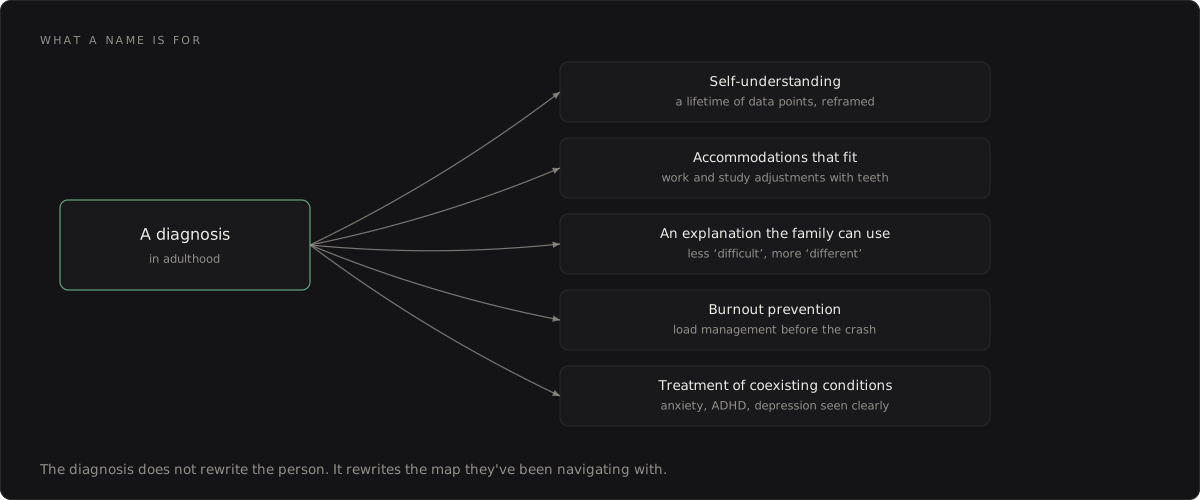
People sometimes ask what the point of a diagnosis is at thirty or fifty. It is a fair question, and the answer is individual. A diagnosis does not change who you are, and there is no medication for autism itself, though co-occurring conditions like anxiety, depression or ADHD are very treatable. What a diagnosis reliably changes is the explanation you carry. Decades of "why is everything harder for me than it looks for everyone else" get a truthful answer, which for many people is worth a great deal on its own. Practically, it can open the door to workplace adjustments, targeted supports, and a framework for arranging your life around your actual wiring rather than a borrowed template. Some people, after assessment, decide the label itself weighs less than the understanding. That is a legitimate outcome too.
If you are considering this, bring your history to a long appointment: what childhood was actually like, what costs you effort that others find automatic, and what you are hoping an assessment would change. That last question deserves care, because it shapes what kind of assessment, if any, will serve you best.
Prefer the full experience? Read this essay in the house. Machine-readable: markdown source.