In defence of the forty-hour story
Nobody asks a reader to justify a thousand pages. On single-player games as a narrative medium, playing slowly as an adult, and why the backlog is a library, not a debt.
I play a stupid amount of single-player games, and for years I carried the standard low-grade embarrassment about it: the hours, the backlog, the sense that a grown man should probably be doing something else with a free evening. Then at some point I noticed something that dissolved the embarrassment completely and permanently. Nobody asks a reader to justify a thousand pages. Nobody looks at a shelf of novels and says "but when will you finish them all". The forty-hour story is a medium. I just happen to prefer mine with a controller.
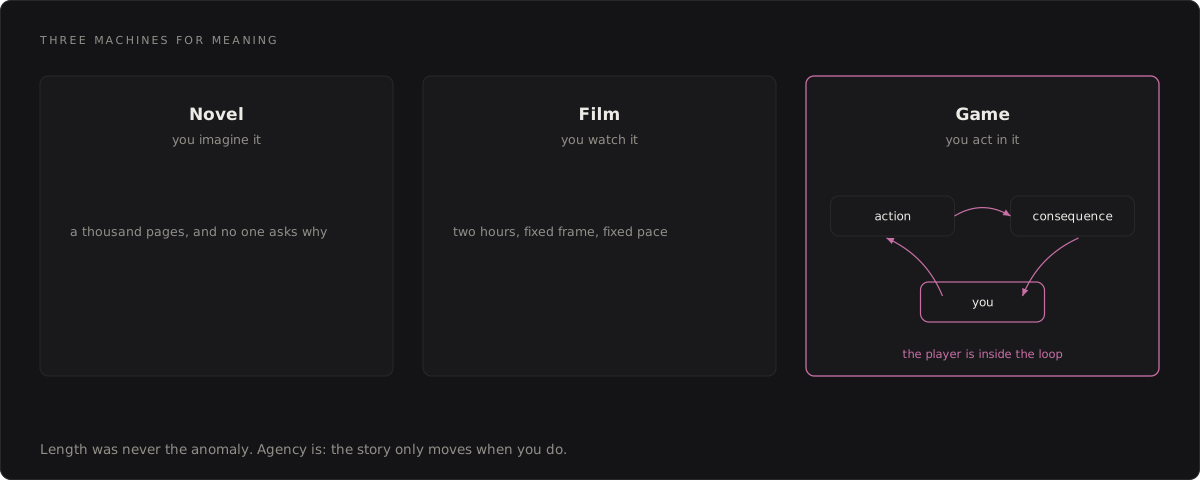
And I'll go further, since this is my site: the medium is doing something no other narrative form can. Every other kind of story happens to someone else. You watch the film character choose; you read the novel character fail; your role is sympathy, at a fixed distance the form itself enforces. Games collapsed the distance. The choice is yours, made with your hands, on incomplete information, and the consequences arrive later, addressed to you personally. The first time a game made a decision of mine curdle, hours downstream, in a way I could trace back to my own reasoning at the time, and The Witcher 3 remains the reigning master of this, letting your most defensible choices ripen into your worst outcomes, I understood that the medium had access to an emotion the others don't. Films can show you guilt. A game can issue it. Regret with your own fingerprints on it is a different substance from sympathy, and no other art form has ever handed it to me.
My canon, for the record, since a taste is a fingerprint: The Witcher 3 at the summit. The old BioWare epics, Knights of the Old Republic above all, which taught a generation that a game could pull the rug on you and have the rug be the point. Baldur's Gate 3, the recent proof that the ceiling is still rising. The Talos Principle, which I'll get to. Zelda for wonder, Elden Ring for awe administered without anaesthetic, God of War for what the medium can do with a father who can't talk to his son. And beneath all of it, a nostalgia tail that goes back to an N64 and never fully lets go.
Why single-player, specifically, since the rest of the world seems to have voted the other way? Partly temperament: multiplayer is sport, single-player is fiction, and I have quite enough competition in my ordinary week without importing it into my evenings. But mostly it's honesty about what the hours are for. A single-player game is reading, not socialising. It's a solitary pleasure and I like it that way: one person, one story, no lobby, nobody thirteen years old and screaming. The industry keeps declaring this kind of game commercially doomed, and then every year or two one of them sells thirty million copies to people quietly hungry for exactly this, and the obituary gets reprinted anyway. Some genres are cockroaches. Bless them.
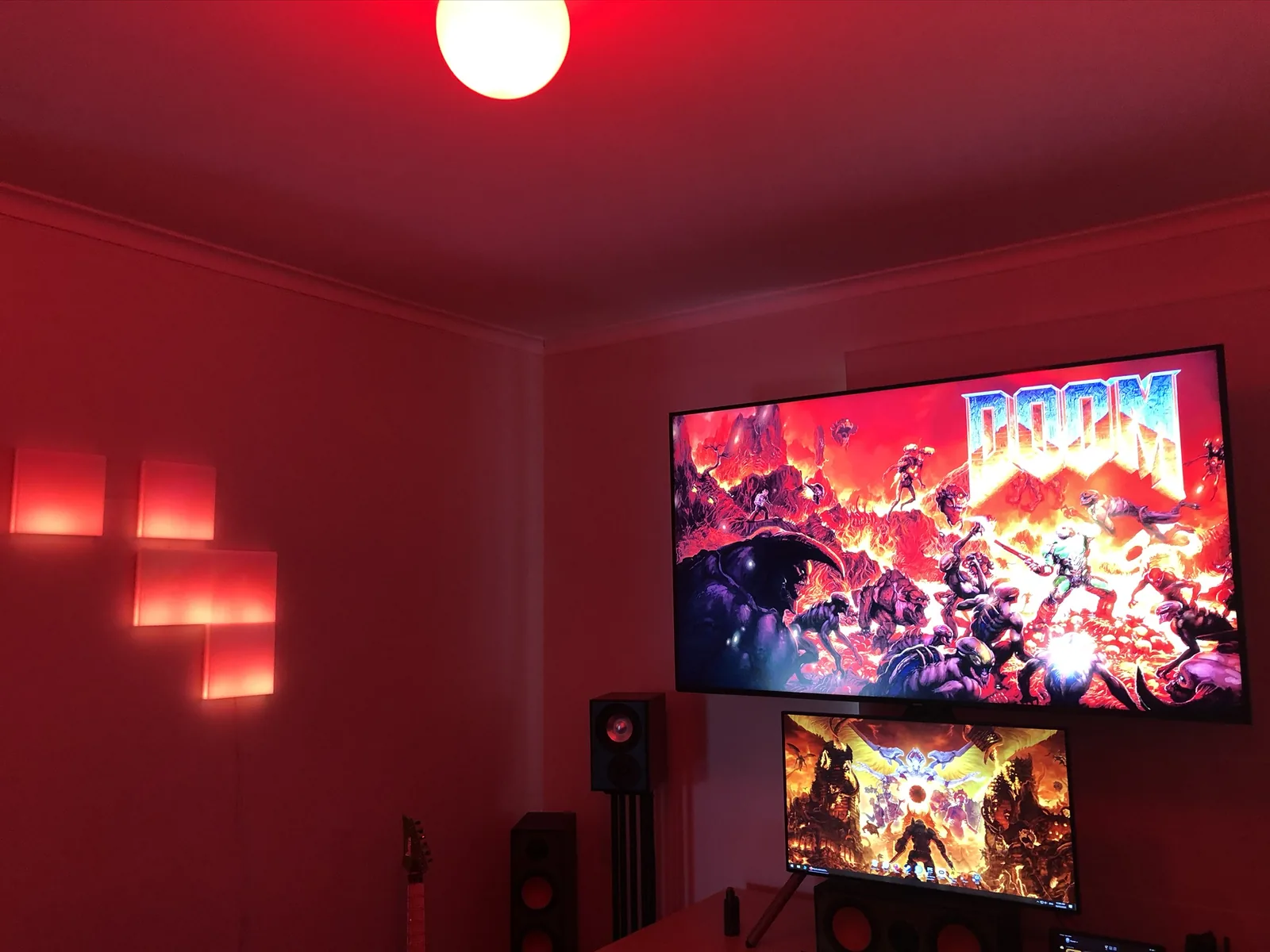
Adult gaming has its own logistics, and they've changed the medium for me, mostly for the better. The unit of play is now the ninety-minute session, wedged between a small child's bedtime and my own collapse, which means a big game takes me a season to finish, and here's the thing: it's better that way. A hundred-hour game consumed across three months stops being a title you completed and becomes a period you lived through. The Witcher 3 isn't a hundred hours to me. It's a winter. I can tell you what was happening in my life during that game the way other people index memory by albums or share houses. Teenagers speedrun the text. Adults marinate in it. I know which reading I'd rather own.
The nostalgia tail deserves one honest paragraph, because going back is an instrument you have to learn to distrust. Revisiting the N64 canon as an adult is a controlled experiment on your own memory, and the results are humbling: the design frequently holds up, the geometry mostly doesn't, and you discover that your recollection of a game was never a recording. It was a remaster your brain produced, upscaled with love, and re-rendered every time you accessed it. I go back anyway. Playing the original while remembering the remaster is its own strange double-vision pleasure, and it's taught me more about memory than most things labelled as being about memory.
And then there's the corner of the medium that justifies everything to the sceptics, if they'd only sit down: the games that are philosophy delivery systems wearing puzzle costumes. The Talos Principle is the best seminar on minds and personhood I've ever attended, and I've attended real ones. It hands you questions about consciousness, identity and what counts as a person, then makes you the test case, quietly, while you think you're just solving laser puzzles, until you look up and realise the exam was administering itself. That a video game did this, more effectively than most books on the subject, stopped surprising me a long time ago. The medium was always capable of it. It was just waiting for everyone to stop apologising.
So no, the backlog doesn't haunt me anymore. A shelf of unread books was never called a failure; it was called a library, and mine happens to run on a GPU. The forty-hour stories will be there when I am, one ninety-minute chapter at a time, and some winter each of them will quietly become a season of my life. That's not time I'll have lost. It's time I'll be able to find.
Prefer the full experience? Read this essay in the house. Machine-readable: markdown source.