Prescience
There is a specific feeling you get when an AI does something your model of it said it couldn't do yet. It deserves a better name than "feeling the AGI", and it deserves some epistemic hygiene. A definition, a defence, and the discipline to go with it.
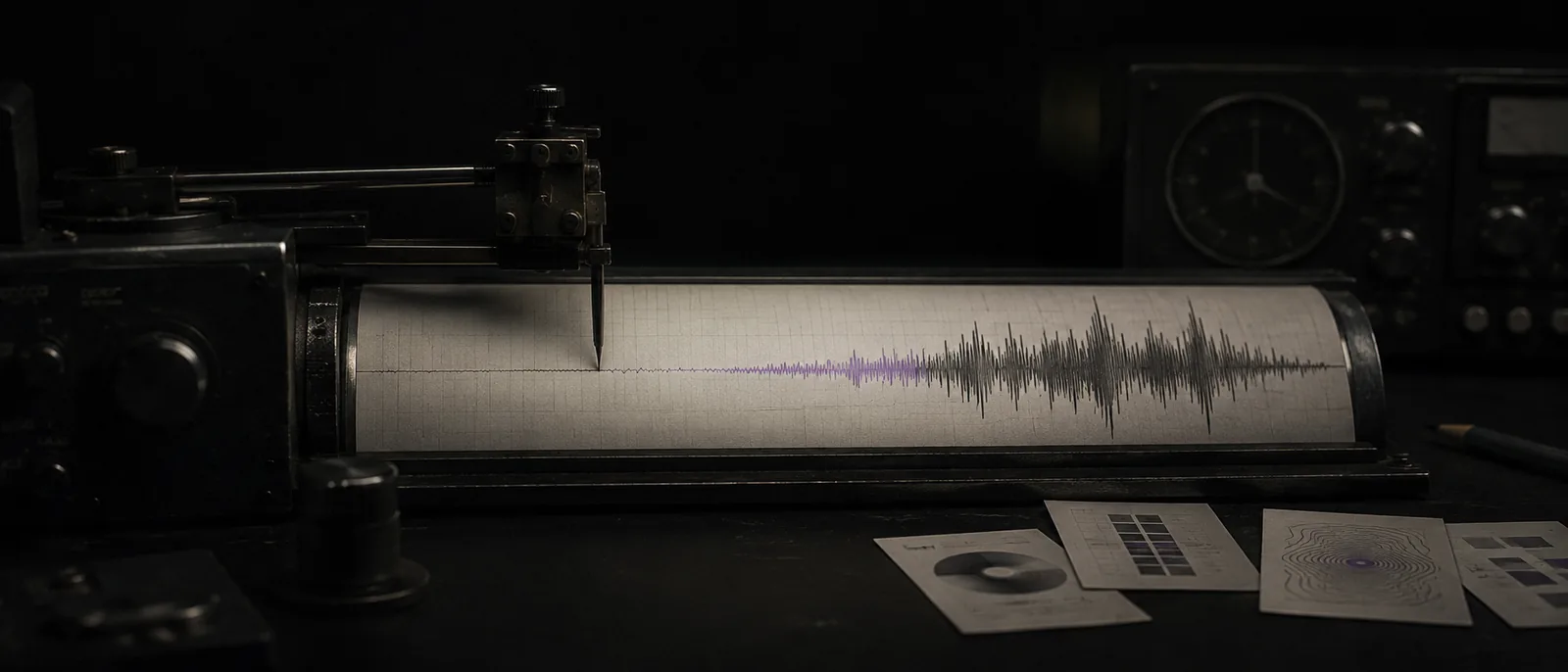
The first artificial intelligence I ever met was trying to kill me. It was 1997, I was six, and the machine was a Nintendo 64 running GoldenEye in a suburban Melbourne living room. I was creeping through a bunker when a guard saw me, raised his rifle, and shot back. Not a cutscene. Not a script playing at me. A reaction, to me, specifically. Somewhere inside that grey cartridge was a thing that had noticed my existence and formed an opinion about it, and the opinion was hostile.
I know now what that guard was. A state machine with a vision cone and a modest repertoire of behaviours, the sort of thing a competent programmer could sketch on a whiteboard before lunch. Calling it intelligence is generous to the point of slander against the word. But the six-year-old on the carpet didn't have that model. Relative to everything he understood about the world, something on the other side of the screen had just made a decision about him, and the feeling that produced did not care about the implementation. I've spent nearly three decades intermittently chasing that feeling. Lately it has started finding me instead.
If you've spent real time with modern AI systems, you know the moment I mean. You're mid-task, treating the thing as a very good tool, when a response comes back that your model of the tool says shouldn't exist. Not eloquent. Not human-seeming. Those are different phenomena, and mostly boring ones. This is a capability arriving ahead of schedule: a connection across a problem you didn't think it could hold in its head at once, a plan you didn't ask for and can't fault, an error caught that you hadn't yet noticed making. The feeling lasts a few seconds and passes. Then some weeks later it happens again. And the honest observation, the one this essay exists to name, is that the gaps between these moments keep shrinking.
The corner of the internet that lives on this stuff already has a phrase for it: feeling the AGI. It's a terrible phrase and I want it gone. Partly on aesthetic grounds, because it sounds like something said at a conference by a man in a Patagonia vest gesturing at an exponential. But mostly on grounds of precision. "Feeling the AGI" names the experience after a conclusion, and a contested one: it asserts that what you felt was the approach of a specific milestone, general intelligence, when what you actually observed was narrower and far more defensible. You watched one concrete capability turn up before your model said it would. The experience deserves a word that describes what happened, not one that pre-books the destination.
The word I've landed on is prescience. Foreknowledge; seeing what's coming before it arrives. In ordinary usage it means prediction, which is an act of analysis: you take the data and derive the trajectory. I mean something slightly different and more literal. Prescience, in the sense I'm proposing, is the experience of being handed a data point from further along the trajectory than you're supposed to be standing. You don't reason your way to it. It happens to you, mid-sentence, and for a few seconds the future is not an extrapolation, it's a thing in front of you behaving out of turn.
There's precedent for naming a feeling this specific, and it comes from VR. Developers there talk about presence: the threshold where the simulation stops being a picture you're looking at and becomes a place you are in. Your cortex knows it's a headset; your brainstem has stopped agreeing. Presence is a magnificent achievement and it is, definitionally, a trick. It's what happens when rendering gets good enough to defeat your senses, and the information it carries is entirely about the renderer.
Prescience is the opposite kind of event. Nothing is fooled. You know exactly what you're talking to, roughly how it works, roughly what it costs to run per token. The jolt is not your senses being deceived about what's in front of you. It's your model being corrected about when you are. Presence dislocates you in space. Prescience dislocates you in time.
Now the objection, which deserves to be made properly because it is mostly right. Feelings are rubbish evidence. The exact sensation I've been describing was produced in 1997 by a vision cone and a handful of if-statements. It was produced in 1966 by ELIZA, a chatbot so shallow that its creator built it partly to demonstrate how superficial the trick was, and was then horrified to find people confiding in it anyway; his own secretary famously asked him to leave the room so she could talk to it in private. Humans are mind-detecting machines with the sensitivity dial glued to maximum. We see agency in thermostats and malice in printers. If the feeling fires for a state machine, the objection goes, then its firing now tells you precisely nothing about the machine.
Correct. And it's the useful kind of correct, because it clarifies what the feeling actually measures. Prescience is not evidence about the system. It is evidence about the gap between the system and your model of it. When the six-year-old felt it, that gap was pure ignorance: his model of what machines could do was so impoverished that a vision cone cleared it easily. The instrument was working fine. The calibration was garbage.
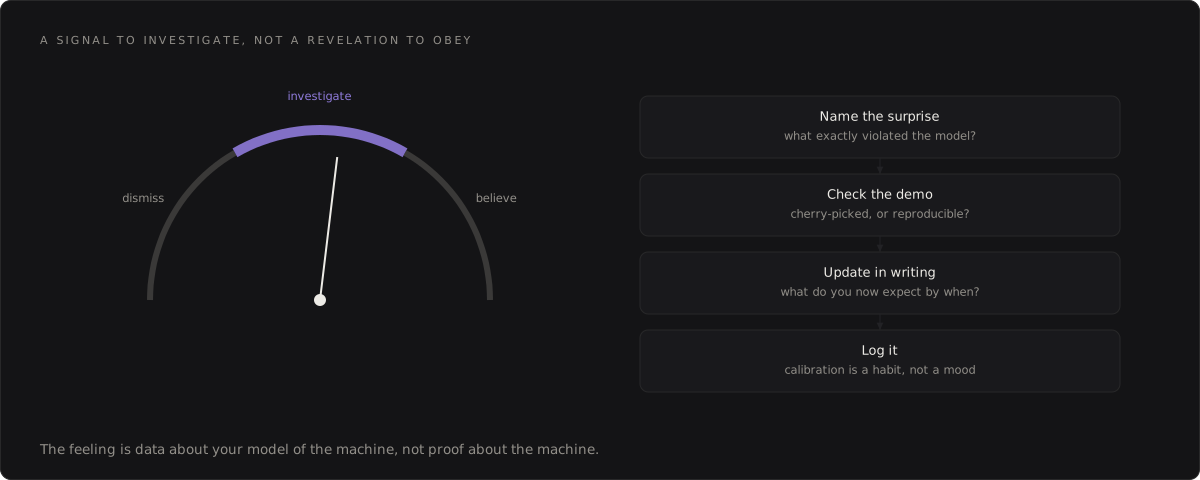
Which is exactly what makes the current version of the experience interesting, because the people reporting it now include observers whose calibration is maintained for a living. I build agentic AI systems as my day job. I read the papers, I run the evaluations, I spend a genuinely unreasonable share of my week watching these models fail in specific, documented, occasionally hilarious ways. My expectations are not set by keynotes and product pages; they're set by contact, daily, at volume. And the surprises keep landing on one side. Not "it seemed alive", which is the ELIZA failure and checkable against nothing, but "it did X", where X is a concrete capability I can verify, and where my informed forecast had X pencilled in for next year or later. A miscalibrated observer being surprised is noise. A calibrated observer being surprised repeatedly, in the same direction, is a measurement. In any other field we would call that a trend and start plotting it. Here we mumble something about vibes and change the subject.
None of which makes the feeling sufficient, and this is where the word needs discipline attached or it degenerates into wonder with a thesaurus. Prescience is a prompt for verification, not a substitute for it. The moment passes, memory inflates, demos are curated, and hype is socially contagious in a way that can counterfeit the whole experience: plenty of people have "felt the AGI" off a cherry-picked video and a quote tweet. The practice I try to hold myself to is boring on purpose. When the feeling fires, write down what the capability actually was, when you had expected it, and how you'd check it held up outside the one shining instance. Sometimes the entry survives scrutiny and the update was earned. Sometimes what fired was novelty wearing prescience's coat, and the entry dies on review. The word is for the entries that survive.
It's fair to ask why the experience needs a name at all. I'll admit a professional bias: a large part of my working life is deciding what things are called, and I've come to believe that naming is most of the job, because a name is a decision about which differences deserve to exist. Unnamed, this experience stays private and unexaminable, a shiver you get sometimes and don't mention because the available vocabulary makes you sound like the vest guy. Named and defined, it becomes an instrument. You can ask a colleague whether a demo gave them prescience or just polish, and the question has an answer. You can notice your own frequency of episodes increasing and treat that as data about the trajectory rather than as a mood. You can cleanly separate it from presence, from novelty, from the ancient human habit of finding faces in wallpaper. A private feeling becomes a shared measurement at the moment it gets a word. That is roughly the history of every instrument we own.
Most people who lived through inflection points didn't feel them. The years the world changed mostly felt like years, and the turning was only visible in retrospect, to historians, in graphs. What is strange about this one is that the change is arriving in interactive increments, twenty seconds at a time, to anyone paying attention, and it produces a specific, repeatable sensation on contact.
I felt it at six, on the carpet in front of a television, when a bundle of if-statements raised its rifle and a mind that wasn't there looked back at me anyway. The gap that feeling measured was a child's. But the instrument was telling the truth about something even then: the distance between what I understood and what was possible had just been demonstrated, in person, ahead of schedule.
Nearly three decades later the same instrument keeps firing, except now I know exactly what I'm looking at, my expectations are professionally maintained, and it fires anyway. That is not wonder misfiring. That is the future arriving early, often enough now to have earned a name.
Prefer the full experience? Read this essay in the house. Machine-readable: markdown source.